
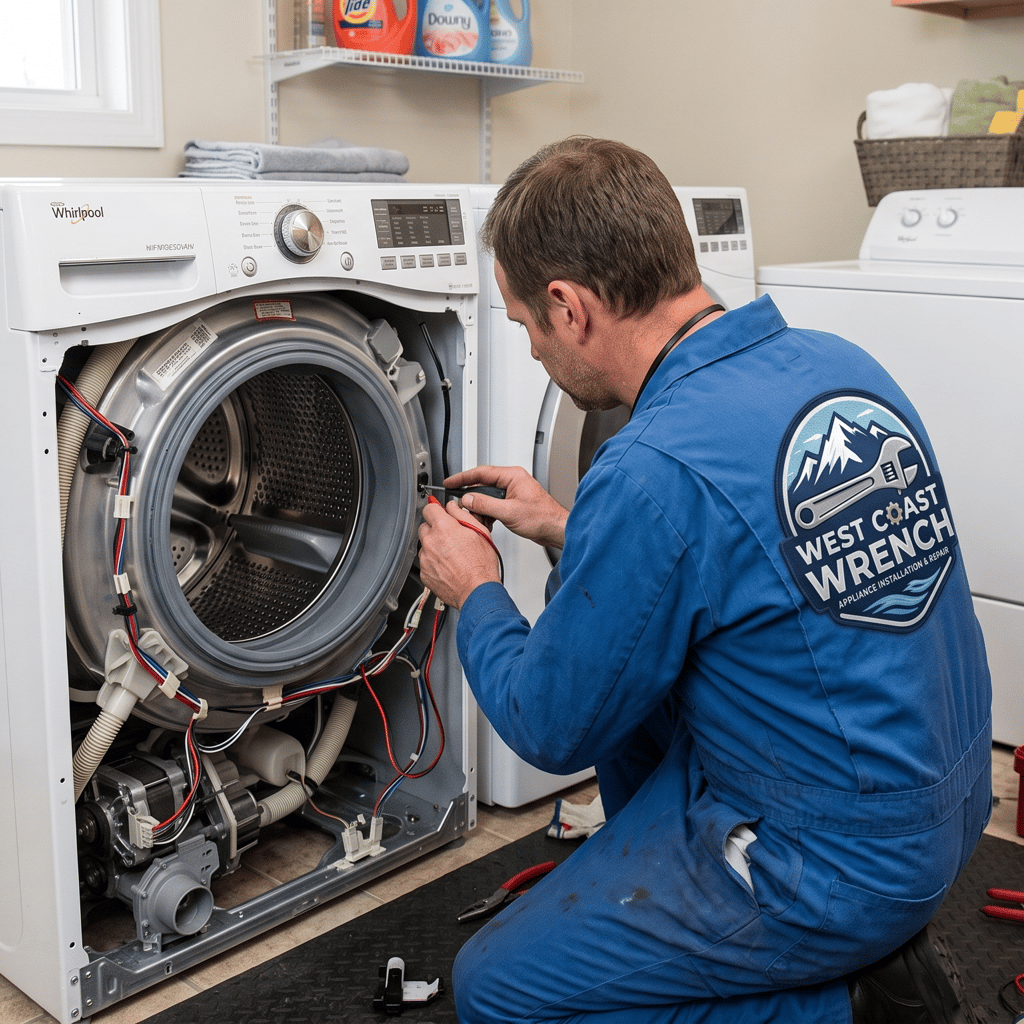

Quick Answer
Homeowners can clean the lint screen every load, wipe the washer door seal, clean the drain filter on front-loaders and look at the hoses. A service visit goes further: hoses and inlet screens, drain pump and filter, suspension and levelling on the washer; the full vent run, lint inside the cabinet, belt, rollers and heating circuit on the dryer. Have the dryer vent checked at least once a year.
What You Can Do Yourself
| Job | How often | Why it matters |
|---|---|---|
| Clean the dryer lint screen | Every load | Keeps airflow up and drying times down |
| Wipe the front-load door seal and leave the door ajar | Weekly | Prevents mould and smells |
| Clean the front-load drain pump filter | Every few months | Catches coins, hair pins and lint before they jam the pump |
| Run a cleaning cycle | Monthly | Clears detergent residue |
| Look at the inlet hoses | Every few months | A bulge, crack or damp fitting is an early leak warning |
Always unplug the machine before opening any panel or filter door, and put a towel and shallow tray down before opening a drain filter; water will come out.
What a Washer Service Checks
- Inlet hoses and screens. Rubber hoses harden and crack with age. Braided stainless hoses are a sensible upgrade, especially upstairs or in a condo. The small screens where the hoses connect can clog with sediment and slow filling.
- Drain pump and filter. Checked for debris, noise and how quickly the tub empties.
- Suspension and levelling. Worn dampers or springs make a washer walk or bang on spin. A washer that is not level wears its bearings faster.
- Door boot or lid lock. Tears in a front-load door seal leak; a tired lid lock stops a top-loader spinning.
- Detergent dosing. Water in most of Greater Victoria is naturally soft, so many machines are over-dosed. Too much detergent leaves residue, smells and suds that interrupt the spin.
Signs It Is Time for a Service Visit
- The dryer takes noticeably longer than it used to.
- The washer bangs, walks or thumps during spin.
- There is a musty smell that cleaning cycles do not fix.
- You see water under the washer, or a hose looks swollen.
- The dryer squeals, thumps or scrapes.
Catching these early usually means a smaller repair than waiting for a breakdown.
What a Dryer Service Checks
The dryer vent is the single most important part. Lint builds up along the duct and at the outside hood, and a restricted vent makes the dryer run hotter and longer. A service visit checks airflow at the outside hood, clears the duct, and makes sure the transition duct behind the dryer is metal and not crushed.
Inside the cabinet, lint collects around the drum, motor and heater housing, where it can be a fire risk. A technician also checks the drum belt, rollers and idler pulley (the usual sources of squealing and thumping), the drum seals, and tests the heating element and safety thermostats on electric models. If yours already has a problem, see our guides to an electric dryer taking two cycles and a Whirlpool dryer not heating.
Stacked Units and Laundry Closets
Many condos and newer townhomes in Greater Victoria have a stacked washer and dryer squeezed into a closet. Those setups need a little extra care. The dryer vent often runs a long way to an outside wall or the roof, the closet traps heat and lint, and there is rarely room to see the hoses without pulling the pair out. A service visit on a stacked unit includes checking that the stacking kit is secure, that the closet door has enough ventilation for the dryer, and that the washer drain and hoses behind the unit are dry. If your building has a shared vent or a booster fan, the strata may handle that part, so check before booking.
How Often Is Enough?
For most households, having the dryer vent checked once a year and the washer looked over at the same visit is a sensible rhythm. Busy households, long vent runs and stacked laundry closets in condos may need attention more often. Heat-pump and condenser dryers have their own routine, covered in our heat pump dryer maintenance guide.
Booking a Visit
When something has already gone wrong, our washing machine service in Greater Victoria and dryer repair in Greater Victoria start with a diagnosis and an upfront flat-rate quote before any work. We service the common brands found in local laundry rooms, including Whirlpool, Maytag, LG and Samsung.
Frequently Asked Questions
How often should a washer and dryer be serviced?
Clean the lint screen every load and the front-load drain filter every few months. Have the dryer vent checked at least once a year; that is also a good time to have the washer’s hoses, pump and suspension looked at.
Should I replace rubber washer hoses?
Rubber hoses harden and crack with age. Replace any hose that is bulging, cracked or damp at the fittings. Braided stainless hoses are a sensible upgrade, especially in condos and upstairs laundry rooms.
Why does my washer smell even after a cleaning cycle?
Usually detergent residue and lint trapped in the door seal, drain filter or dispenser. Use less detergent, wipe the seal weekly and leave the door open between washes.
Is dryer vent cleaning really necessary?
Yes. A restricted vent makes the dryer run hotter and longer, wastes electricity and increases fire risk. Have the full vent run checked at least yearly.