
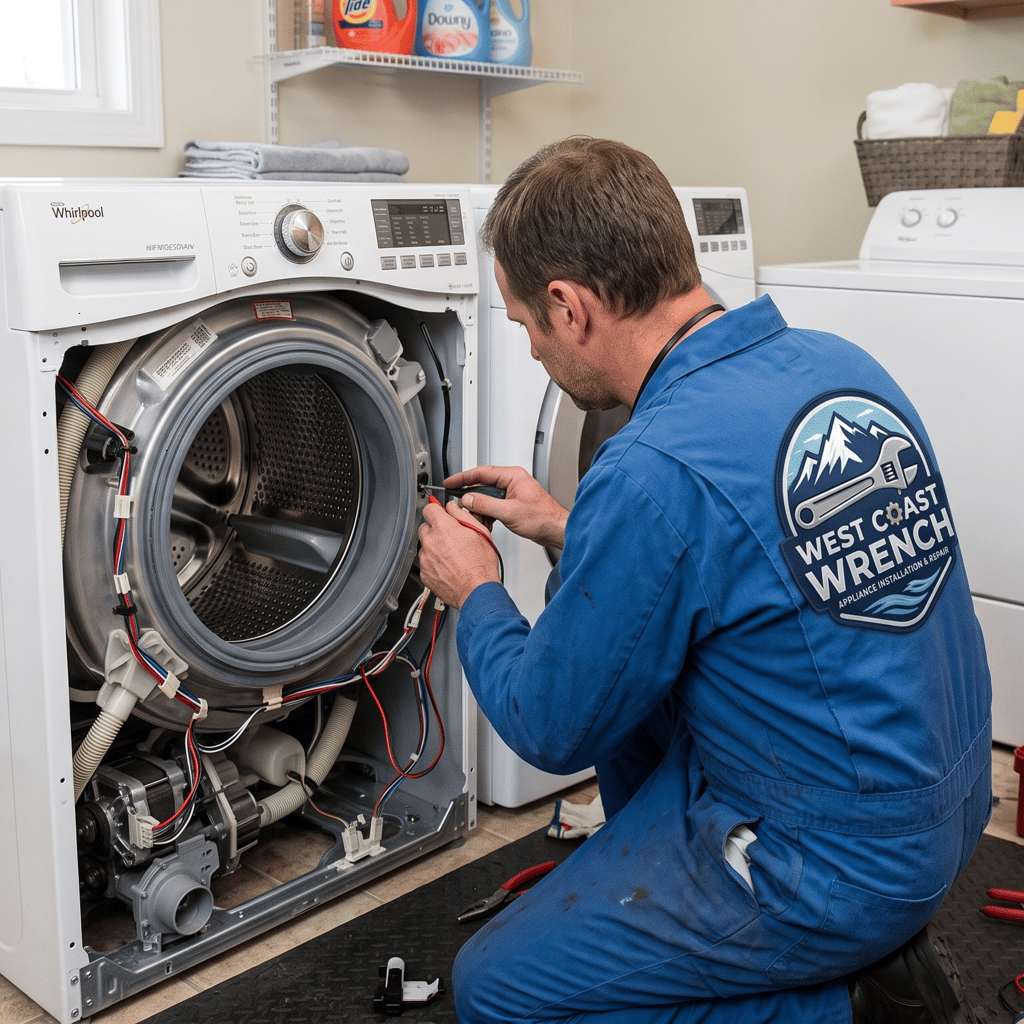
The CFM Physics of Electric Drying
An electric dryer evaporates water into vapor, but if that wet vapor cannot escape the metal drum, it simply steams your clothes in an enclosed sauna. A healthy dryer moves **150 to 200 CFM (Cubic Feet per Minute)** of air out of the building.
When airflow drops below 80 CFM due to duct resistance, the air inside becomes 100% saturated with humidity. Even with the heating element glowing red-hot, zero evaporation can take place.
1. Dryer Sheet Wax Glazing on Moisture Sensor Bars
If you use auto-sensing cycles (Sensor Dry) and the dryer shuts off after only 25 minutes leaving clothes damp, look right below the lint screen inside the drum opening. You will see two parallel curved metal strips.
When wet clothes tumble across these bars, water bridges the electrical gap, completing a micro-amp circuit. As clothes dry, electrical resistance rises, telling the timer to end the cycle. Dryer sheets (Bounce, Gain) contain quaternary ammonium wax compounds. Over time, that wax bakes onto the metal bars as an invisible non-conductive film. The board thinks clothes are dry instantly and cuts the cycle short. Fix: Rub the metal bars vigorously with a cotton swab soaked in rubbing alcohol once a month.
2. The Invisible \"Waxy\" Lint Screen Barrier
You pull the lint screen out and peel the lint off every load. It looks clean, right? Run this test: take the screen to the kitchen sink and turn on the tap directly into the center of the mesh.
If water pools and spills over the plastic frame like a solid cup instead of flowing straight through the mesh holes, your screen is **choked with fabric softener wax**. Wash the screen with dish soap and a soft nylon toothbrush until water flows through instantly.
3. Jammed Exterior Wall Backdraft Damper
Walk outside your home while the dryer is running. Locate the exterior plastic or metal exhaust hood on the outside wall.
The louver flaps or damper door must be blown wide open by the forceful rush of warm exhaust air. If lint has glued the flaps shut, or garden shrubs have overgrown the hood, backpressure builds. The cycling thermostat on the heater housing trips repeatedly, turning the heating element off every 4 minutes before clothes can dry.
4. Weak Cycling Thermostat Drift
The operating thermostat regulates cabinet temperature between 135°F and 155°F. With age, its internal bi-metal spring weakens, opening at only 110°F. The drum stays lukewarm rather than hot, turning a 45-minute cycle into a 90-minute marathon.
Professional Electric Dryer Service Across Greater Victoria
West Coast Wrench measures true CFM exhaust velocity, tests cycling thermostats, and replaces failing heating coils for Whirlpool, Maytag, LG, Samsung, and Bosch electric dryers across Greater Victoria and Southern Vancouver Island.