
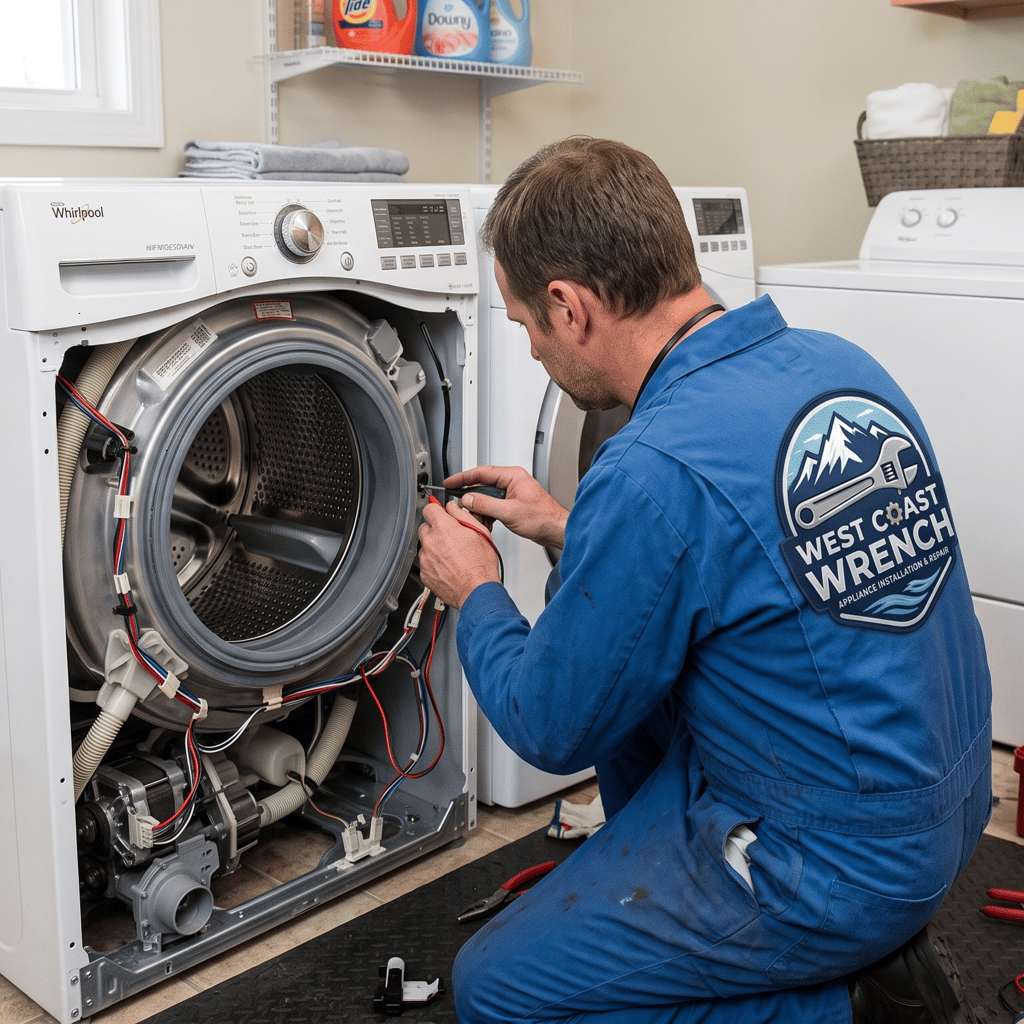
Thermodynamic Physics: The Closed-Loop Dehumidifier
Traditional electric dryers pull indoor room air, bake it across a 5,000-watt heating element, blast it through your clothes, and dump all that warm moisture outdoors through a 4-inch metal pipe.
A heat pump dryer operates as a sealed, recirculating dehumidifier. A miniature onboard refrigeration compressor circulates R134a or R450A refrigerant. Warm, moist air leaving the drum is passed over a **cold evaporator coil**, which flash-condenses the water vapor into liquid droplets. The cold, dry air then passes immediately over the **hot condenser coil**, reheating it before blowing back into the drum. Zero air leaves the machine.
1. The Secondary Plinth / Base Filter (The #1 Service Failure)
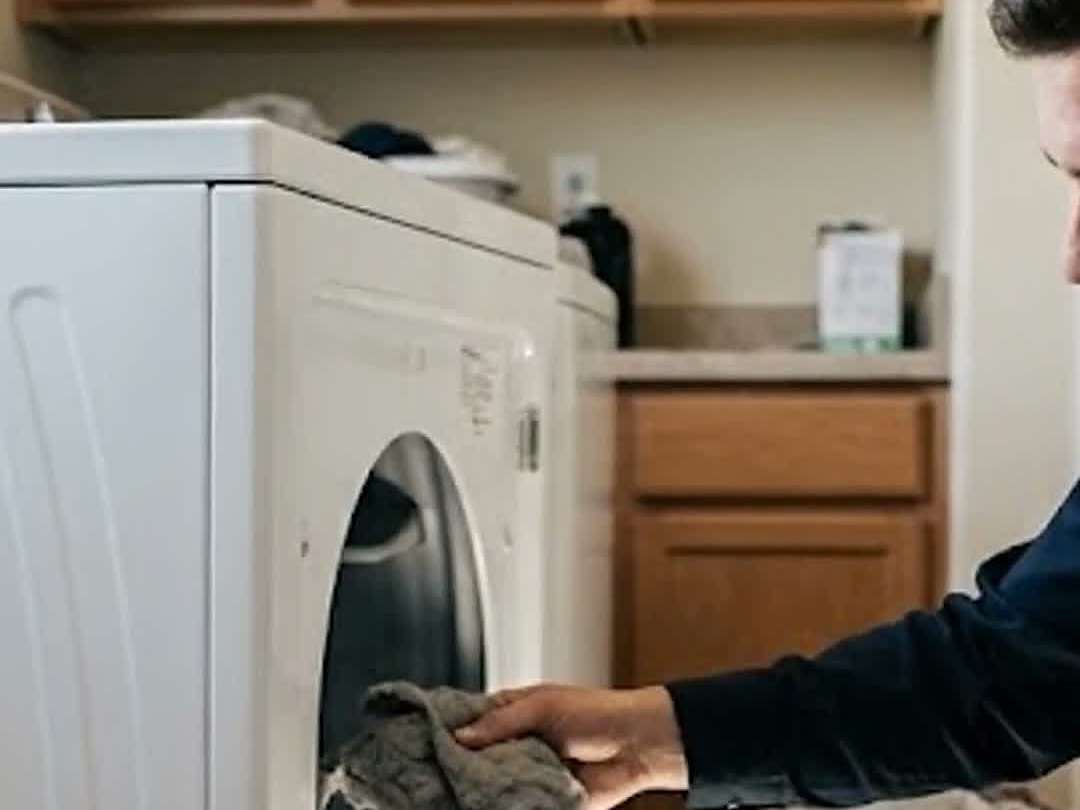
Every homeowner knows to clean the primary lint screen inside the door after each cycle. But heat pump dryers have a **critical secondary filter** located behind a push-release access door at the bottom front left of the machine.
This secondary filter contains a multi-layer washable dense foam or micro-mesh cartridge. Its job is to capture ultra-fine lint fibers before air touches the wet aluminum evaporator coil fins. If you fail to wash this lower foam filter every 5 to 10 loads, wet lint bypasses the filter and adheres directly to the dripping-wet evaporator fins.
Over six months, this forms an impenetrable felt sweater across the coils. Airflow drops by 80%, drying times jump from 65 minutes to 3.5 hours, and the compressor overheats. Maintenance: Wash the lower foam filter under warm running water, squeeze dry, and vacuum the aluminum coil fins gently with a soft brush attachment.
2. The Condensate Lift Pump and Float Chamber
All the moisture extracted from your clothes drains into an internal sump reservoir in the bottom base pan. An electric miniature centrifugal pump lifts this condensed water either up into an upper slide-out tank or through a drain hose straight into the laundry standpipe.
Microscopic lint fibers inevitably wash down into this water pan along with the condensed water, forming a thick gray sludge. When sludge blocks the float switch, the machine halts mid-cycle and beeps with an 'EMPTY WATER CONTAINER' error, even when the top tank is bone dry. Technicians flush this sump pan and clear the miniature pump impeller.
3. Never Use Traditional Fabric Softener Sheets
Traditional dryer sheets (Bounce) melt synthetic tallow wax into the tumbling clothes. In a standard vented dryer, 90% of that vapor is blown outdoors.
In a closed-loop heat pump dryer, that melted wax has nowhere to go. It recirculates through the sealed air loop and bakes permanently onto the cold evaporator coils, creating a hydrophobic chemical barrier that repels water droplets and stops condensation completely. Strict Rule: Use wool dryer balls instead of dryer sheets.
4. Running the Built-In Heat Exchanger Rinse Cycle
Premium heat pump dryers (such as LG Dual Inverter and Miele TwinDos units) feature automated self-cleaning condensors that use collected water to backflush the coils. However, running a monthly manual diagnostic 'Condenser Care / Drum Clean' cycle ensures optimal thermal heat exchange and prevents stagnant mildew odors.
Heat Pump Dryer Service & Diagnostics Across Victoria
West Coast Wrench specializes in advanced refrigeration diagnostics, coil descaling, and condensate pump servicing for Miele, Bosch, LG, Whirlpool, and Blomberg ventless heat pump dryers throughout Greater Victoria and the Peninsula.