

Quick Answer
On an electric Whirlpool dryer, no heat usually comes down to one of four things: the home circuit is only delivering half its power (the dryer may show L2), the vent is restricted so the safety devices shut the heat off, a heating element or one-time safety fuse has failed, or the cycle selected does not use heat. Long drying times are most often caused by a blocked vent, an overloaded drum or clothes coming out of the washer too wet.
How Your Whirlpool Dryer Makes Heat
An electric dryer runs on a 240-volt circuit. The motor and controls only need half of that supply, which is why a dryer can tumble normally while producing no heat at all. The heat comes from a coiled heating element in a metal housing. Air is pulled across the element, through the drum and out through the vent to the outside of your home.
Several safety devices sit in that path. Thermostats switch the element on and off to hold temperature, and one-time thermal fuses open permanently if the dryer ever overheats. When a thermal fuse blows, it is a symptom: something made the dryer run too hot, and that something is usually poor airflow. Replacing the fuse without finding the cause means it will blow again.
Safe Checks Before You Call
- Check the cycle. Air Fluff, Air Dry and some Wrinkle Shield settings use no heat. Pick a timed or sensor cycle with a heat setting and test again.
- Look at the display. If you see L2, the dryer is reporting low or no line voltage. Go to your electrical panel, switch the dryer’s double breaker fully off, then back on. One side of a two-pole breaker can trip on its own.
- Clean the lint screen and look at the screen slot. Lint packed below the screen restricts airflow just as much as a dirty screen.
- Check the vent outside. With the dryer running, go outside and find the vent hood. You should feel strong, warm airflow and see the flap open. Weak airflow, a stuck flap or lint around the hood means the vent run needs cleaning.
- Look behind the dryer. Unplug it first. A crushed or kinked transition duct, or a thin foil or plastic duct, chokes airflow. Manufacturers call for rigid or semi-rigid metal duct.
- Check the load. Dry fewer items at a time, and make sure the washer is spinning properly. Clothes that come out dripping can take twice as long to dry.
When to Call a Professional
- The dryer still runs cold after the breaker reset and vent checks.
- You smell burning, see scorch marks, or the outside of the cabinet gets very hot.
- The dryer stops partway through or will not start at all.
- The drum is hot but the clothes stay damp, even with a clean vent.
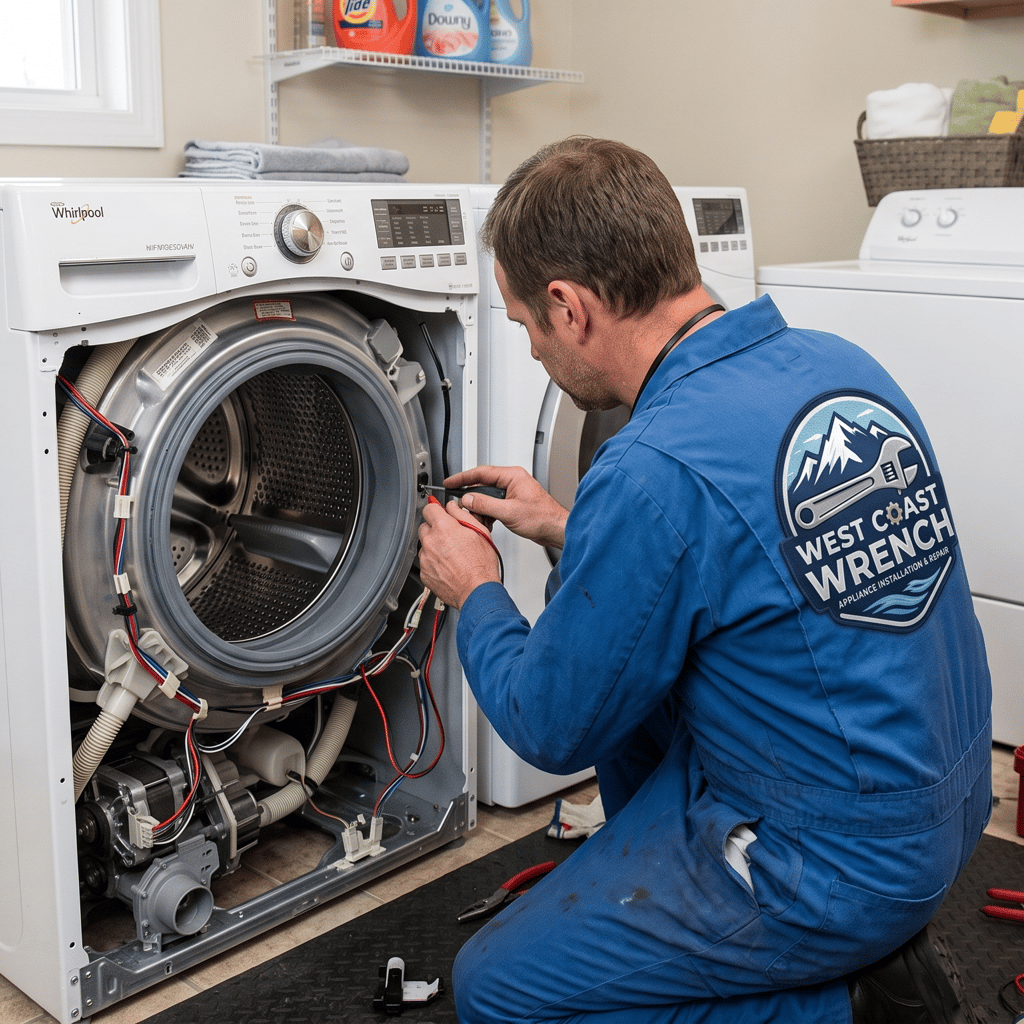
Testing a heating element, thermal fuse or thermostat means opening the cabinet and using a meter on parts that carry 240 volts. That is a job for a trained technician.
Why Drying Takes Two Cycles
When a dryer still produces heat but takes too long, the problem is nearly always airflow or moisture. Hot, damp air has to leave the drum quickly. If it cannot, the dryer runs warm but the moisture stays in the clothes, and the safety thermostats cycle the heat off more often than normal.
Many homes in Greater Victoria have long vent runs: condos and townhomes often vent through a wall, soffit or roof several metres away, and older houses may have vents that were extended when a laundry room was moved. A long run with several bends collects lint faster than a short one. If your dryer has slowly got worse over months, the vent is the first place to look. Our guide to dryer vent fire prevention explains how to check a vent run safely.
Sensor-dry cycles have their own quirk. Two metal strips inside the drum detect moisture by touch. Fabric softener sheets leave a thin film on them, which can end a cycle early and leave clothes damp. Unplug the dryer and wipe the strips with a soft cloth dampened with rubbing alcohol.
Parts That Commonly Fail
Once airflow and power are ruled out, the usual suspects on electric Whirlpool dryers are the heating element (the coil can break, often after years of restricted airflow), a blown thermal fuse or thermal cut-off, a failed cycling or high-limit thermostat, or a temperature sensor (thermistor). Some models show a code in the F3 series when a temperature sensor circuit has a problem. Our page on Whirlpool dryer error codes explains the most common ones.
Each of these parts can be tested with a meter, which tells a technician exactly what failed instead of replacing parts by guesswork. For booking, our dryer repair in Victoria starts with that diagnosis and a flat-rate quote, and our Whirlpool appliance repair in Victoria page covers the rest of the Whirlpool and Maytag range.
What Not to Do
Never bypass or jumper a thermal fuse to get the heat back, even for one load. It is the part that stops an overheating dryer from starting a fire. Do not run a dryer with the lint screen removed, and do not keep running it if you notice a hot or burning smell. If you are not sure whether the dryer is safe, unplug it and call.
Frequently Asked Questions
Why does my Whirlpool dryer run but not heat?
The motor runs on half of the 240-volt supply, so the dryer can tumble with no heat if one side of the breaker has tripped. Reset the double breaker fully off and on. If it still runs cold, the usual causes are a blown thermal fuse, a failed heating element or a restricted vent.
What does L2 mean on a Whirlpool dryer?
L2 means the dryer is detecting low or no line voltage, so the heater will not switch on although the drum keeps turning. Check the breakers or fuses for the dryer circuit. If the code returns, have the circuit and the dryer checked.
Can I replace a dryer thermal fuse myself?
A thermal fuse only blows when the dryer overheats, so a new fuse will usually blow again unless the cause, most often a blocked vent, is fixed. Unplug the dryer before any inspection and never bypass the fuse.
How often should a dryer vent be cleaned?
Clean the lint screen after every load and have the full vent run checked at least once a year. Long vent runs, like those in many condos and townhomes, can need cleaning more often.