
The Drainage Sequence in Modern Washers
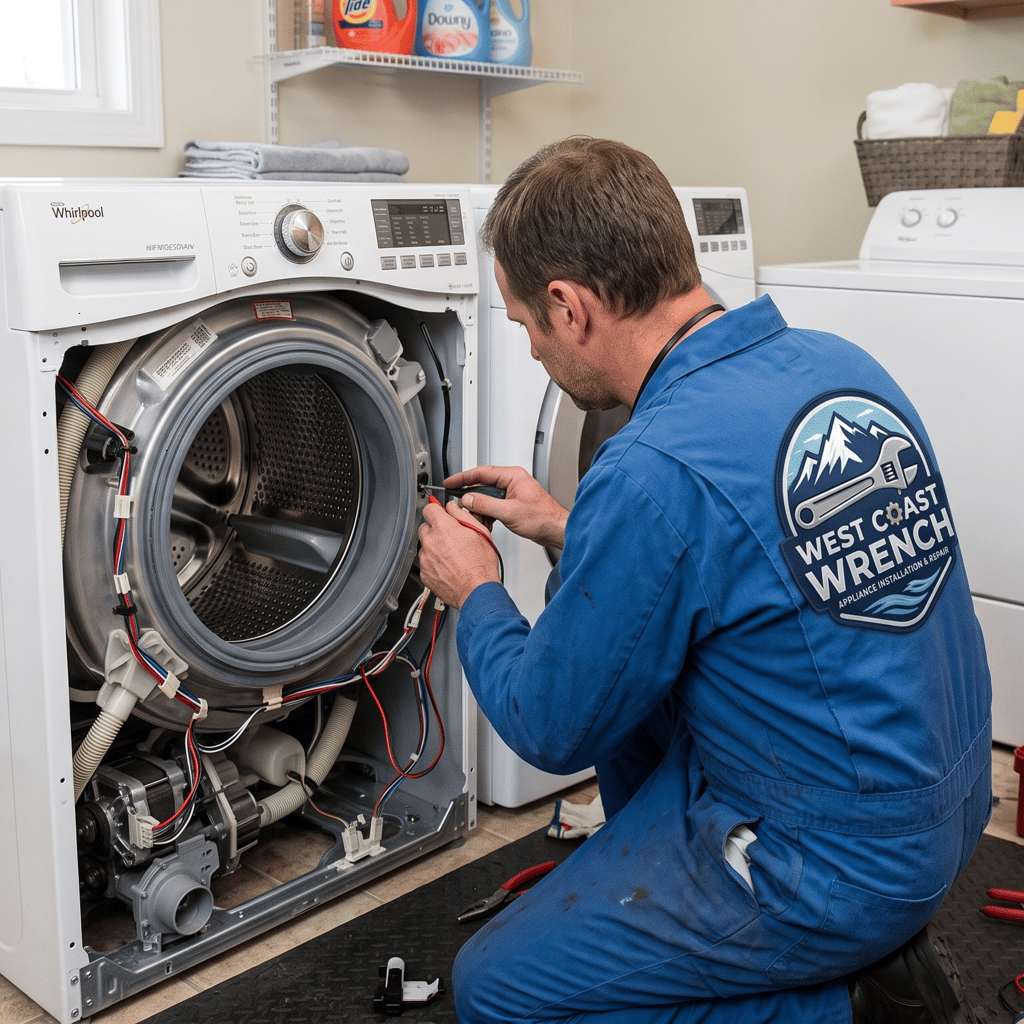
A modern washing machine cannot spin until it drains. The electronic control board listens to an analog **pressure transducer sensor** that monitors the air column inside a rubber pressure tube.
When the wash cycle finishes, the board fires the drain pump motor. If the water level does not drop to "empty" within a strict 6-minute window, the controller triggers a safety abort: it kills power to the drive motor to prevent violent out-of-balance sloshing and keeps the door locked. The problem is almost always physical rather than electronic.
1. Clearing the Lower Coin Trap Cleanout Filter
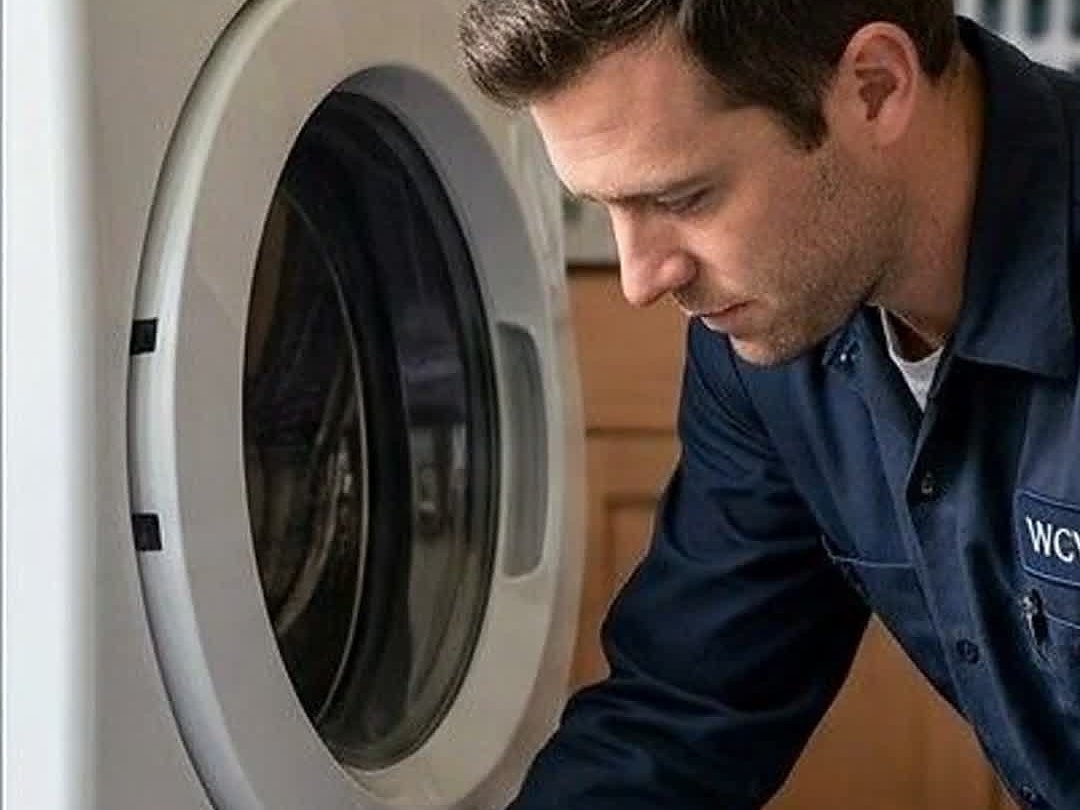
On 70% of non-draining front-load washers (Samsung, LG, Whirlpool, Bosch), the fix takes 10 minutes and zero new parts:
- Unplug the washer from the wall outlet.
- Place towels and a shallow baking sheet on the floor in front of the lower bottom hatch.
- Pull out the tiny rubber auxiliary drain hose, uncap the plug into a bowl, and drain the standing water out of the drum gradually.
- Once water stops flowing, twist the large circular filter handle counterclockwise and slide it out.
Inspect the chamber: hair pins, bra underwires, Canadian loonies, and baby socks routinely jam the filter or wind around the black rubber impeller blades behind it. Shine a flashlight inside and verify the impeller spins freely with your finger.
2. Mechanical Drain Pump Motor Failure
If the filter is spotless and the impeller spins smoothly by hand, but the machine hums or buzzes without pumping, the drain pump motor itself has failed. Modern pumps use synchronous magnetic rotors.
When small plastic bushings wear out, the rotor chatters and cannot generate starting torque under water pressure. Technicians test the pump coil across its spade terminals with a multimeter: a healthy 120V drain pump measures 12 to 25 ohms. An open coil or shorted winding requires replacing the pump assembly.
3. Standpipe Siphoning & Air Gap Height
In laundry installations across Victoria and the Capital Region, improper drain hose height creates persistent drainage problems:
- Hose pushed too deep: If you shove the corrugated drain hose more than 6 to 8 inches down the wall pipe, it enters standing water in the P-trap, creating a negative-pressure siphon that pulls waste water back into the drum.
- Standpipe too low: The top rim of the standpipe must be at least 36 inches above the floor (higher than the washer's internal water level) to prevent gravity draining during wash agitation.
4. Clogged Pressure Transducer Air Dome
At the bottom of the outer plastic tub sits a small rubber bell called the air dome, connected by a 1/4-inch clear vinyl tube to the main circuit board. Over years of cold-water washing, thick detergent scum can plug the mouth of this dome, preventing the sensor from registering that water has drained.
Professional Washer Service in Greater Victoria
Standing water in your laundry room is a recipe for mold and floor damage. West Coast Wrench carries factory OEM drain pumps, pressure transducers, and drain hoses for LG, Samsung, Whirlpool, Maytag, Bosch, and Electrolux washers across Greater Victoria.