
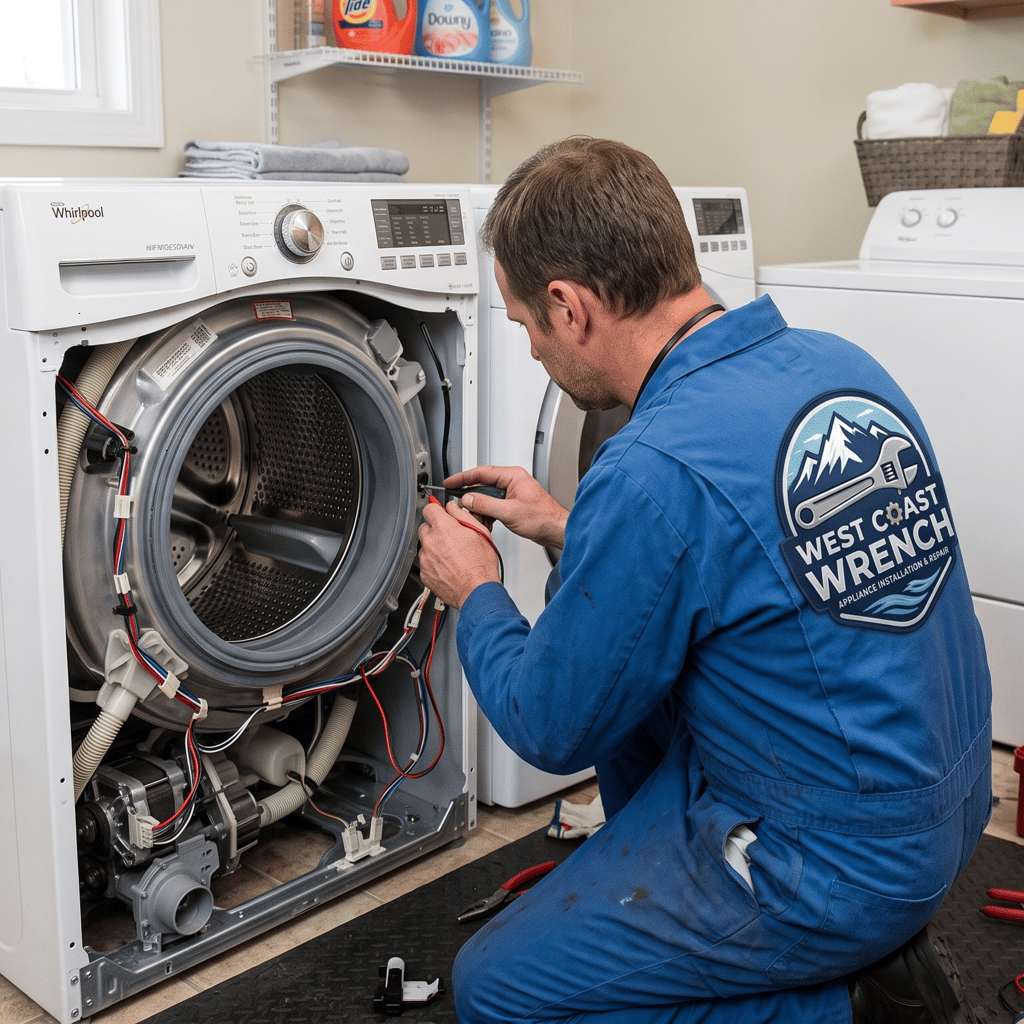
The Victoria Paradox: Ultra-Soft Water Overdosing
Most laundry advice assumes municipal water has 150 to 300 mg/L of dissolved calcium carbonate (hard water). But in Victoria, Saanich, and Oak Bay, water comes from Sooke Lake reservoir and averages only **15 to 30 mg/L**—exceptionally soft water.
In soft water, laundry detergent lathers with extreme efficiency. When homeowners fill the detergent cup to line 2 or 3 as instructed by the bottle label, they are using **three times too much soap**. The washer’s water-saving rinse cycle cannot rinse out that mountain of dense suds. The soapy emulsion settles right back into the fabric weave as a chalky white residue when the drum spins dry.
1. The Two-Tablespoon Rule for Victoria Washers
If you have a front-load or HE top-load washer in Victoria, you only need 2 level tablespoons (30 mL) of liquid HE detergent for an entire full load—and only 1 tablespoon for normal loads.
Never use powdered detergent in cold water cycles: tap water on Vancouver Island in winter drops to 45°F (7°C), which is far too cold to dissolve the sodium carbonate binders in powdered detergents. The granules stay whole and get pressed into dark cotton fibers.
2. Late Siphoning from the Dispenser Drawer
Inside the detergent drawer, plastic siphon caps regulate when liquid soap and fabric softener are flushed into the tub. Over months of use, gummy silicone oils from fabric softeners clog the tiny siphon ports.
Instead of flushing during the main wash, the soap stays trapped until the *final spin cycle*, splashing concentrated detergent onto clothes right as the machine drains, with zero subsequent rinse water to wash it away. Pull the drawer completely out and soak it in warm soapy water once a month.
3. Restricted Cold Water Inlet Solenoid Screen
Washers always rinse using 100% cold water to save energy. If sediment or municipal pipe rust clogs the tiny plastic screen where your cold garden hose screws into the back of the washer, rinse water flow drops to a trickle.
The control board only opens the valve for a set period. If low flow delivers only 3 liters of water instead of 12 liters, the clothes never submerge enough to release residual soap. Unscrew the cold supply hose and use needle-nose pliers to pull out and rinse the mesh sediment screen.
Laundry Machine Diagnostics in Greater Victoria
Dealing with stubborn soap marks, drum odors, or weak rinse cycles? West Coast Wrench cleans internal tub channels, replaces weak water inlet valves, and services washers for Whirlpool, Maytag, LG, Samsung, and Bosch across Greater Victoria and Southern Vancouver Island.