
The Anatomy of an Ice Making Harvest Cycle
Every residential automatic ice maker follows a rigid 4-step sequence:
- Fill: A dual water inlet solenoid valve behind the fridge opens for 5 to 7 seconds, delivering ~110 mL of water through a fill tube spout into the mold tray.
- Freeze: An internal bimetal thermostat or NTC sensor waits until the mold reaches 15°F (-9°C) to verify ice is solid to its core.
- Melt & Harvest: A small heating loop under the tray activates for 60 seconds to release the ice cubes from the aluminum mold while a 12V motor sweeps plastic ejector blades forward.
- Bucket Level Check: A mechanical wire feeler arm or optical infrared beam checks if the ice storage bin is full.
If any single step fails, the entire sequence shuts down.
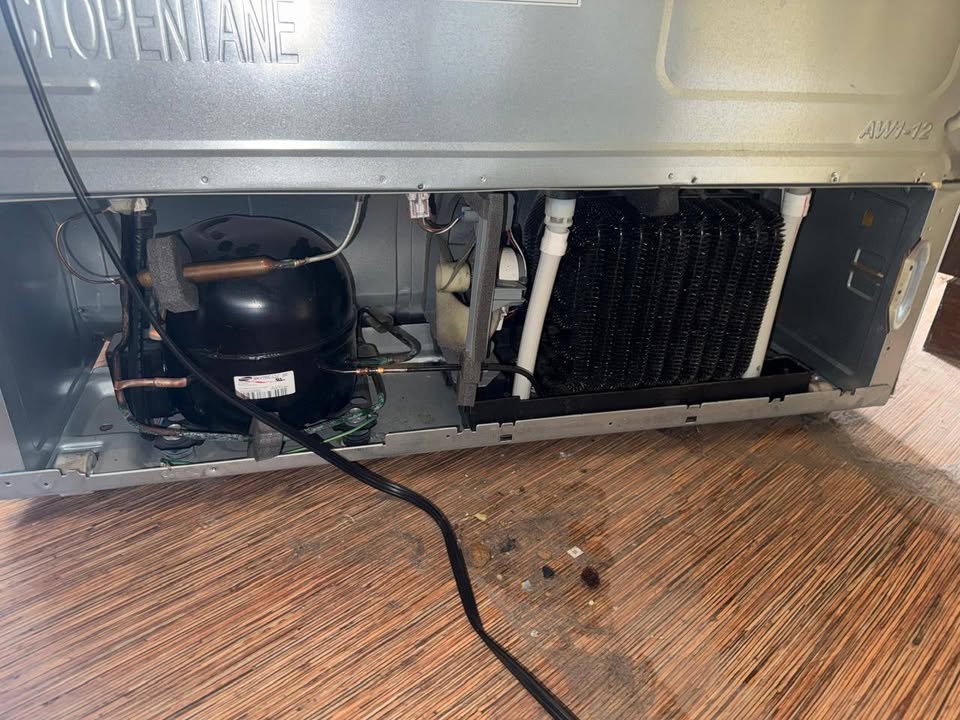
1. The Frozen Fill Tube Nozzle
The most common cause of an ice maker that stops filling while the door dispenser still pours water is an ice plug inside the rubber fill tube spout at the top rear of the ice maker.
Water inlet valves require a minimum of 20 to 40 PSI to overcome an internal spring diaphragm. If your water filter is clogged or house pressure is low, the valve closes slowly. A single drop of residual water lingers at the tip of the spout, freezes in the 0°F air, and creates a dam. Inspect the spout behind the ice maker with a flashlight; if it is plugged with solid ice, melting it with warm air and replacing your filter fixes the problem.
2. Dual Water Inlet Solenoid Valve Failure
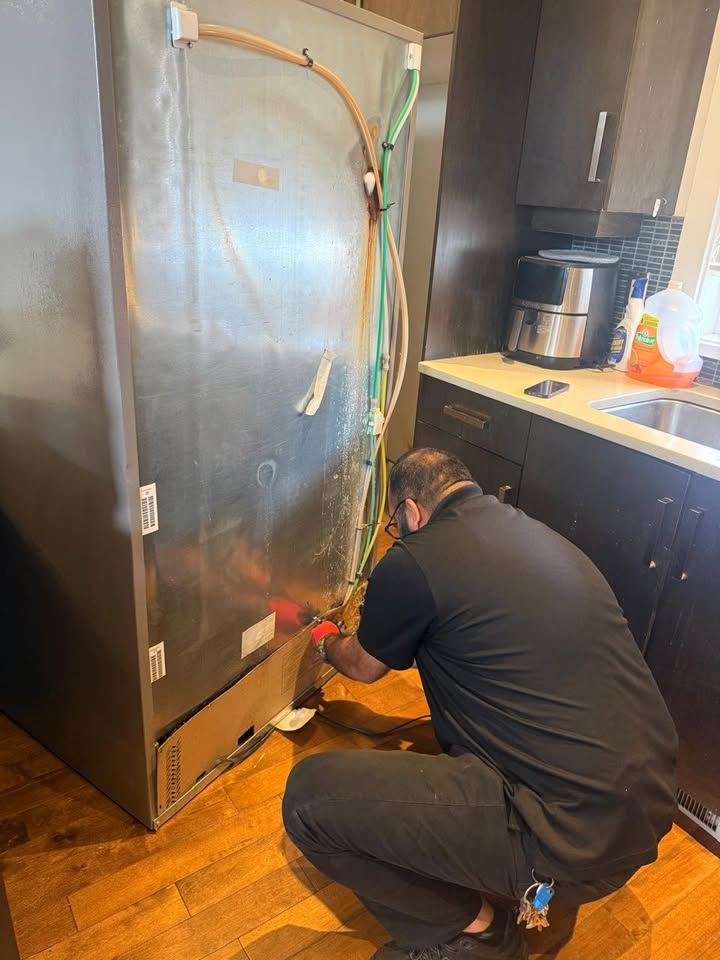
Mounted at the bottom rear of your refrigerator is a dual-coil electric water inlet valve. One solenoid feeds the chilled door water dispenser; the other feeds the ice maker.
Just because your water dispenser works does NOT mean the ice maker valve is functioning. With the refrigerator unplugged, pull off the two harness wire leads to the secondary ice maker coil and test resistance with an ohmmeter. A healthy solenoid coil measures between 200 and 500 ohms. If it reads open loop (O.L.), the magnetic coil is burned out and cannot open the water line.
3. Stripped Harvest Gears & Ejector Jam
If you look into the ice mold and see full, solid cubes with plastic ejector blades buried halfway into the ice, the motor has stalled. This happens when the mold heater fails to release the cubes, causing the drive motor to strip its nylon gears trying to force them out.
Never chip ice cubes out with a kitchen knife or screwdriver; doing so gouges the non-stick Teflon coating off the aluminum mold and permanently damages the ejector rake. Power cycle the test button under the front cover to observe whether the motor attempts a forced harvest cycle.
4. Optical Infrared Bucket Sensors vs. Mechanical Bail Arms
On Whirlpool, KitchenAid, and Samsung French door models, an optical LED infrared beam shoots across the ice bucket to check volume. If frost coats the optical emitter lens or a tall plastic freezer container breaks the beam, the control board assumes the bin is full and shuts down indefinitely.
Professional Refrigerator & Ice Maker Service in Victoria
Struggling with a frozen ice room in your French door fridge or a dead in-door dispenser? West Coast Wrench diagnoses and replaces factory OEM ice maker assemblies, inlet valves, and secondary defrost loops for Samsung, LG, Whirlpool, Bosch, KitchenAid, and Sub-Zero across Greater Victoria.