
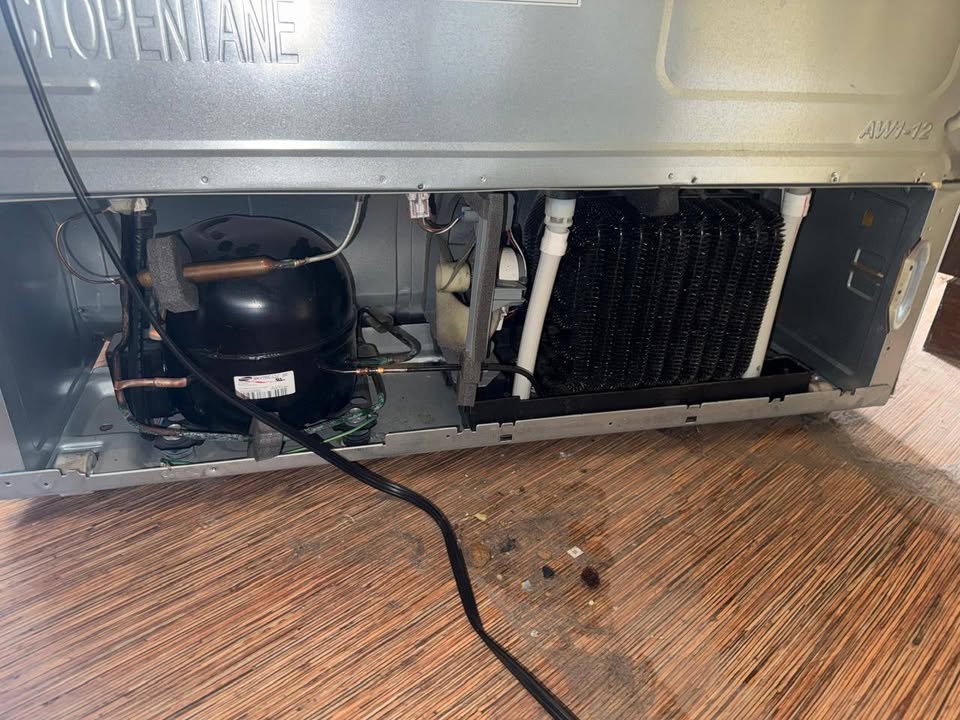
The Automatic Defrost Cycle Explained
Every 8 to 12 hours of compressor run time, modern refrigerators initiate an **active defrost cycle**. The compressor and evaporator fan shut off, and a high-wattage electric heating element woven beneath the aluminum evaporator coils energizes for 15 to 25 minutes.
The heater melts accumulated frost into water, which drains through a small hole into an exterior drip pan underneath the compressor to evaporate. When any component in this loop fails, frost builds upon frost until airflow is choked off completely.
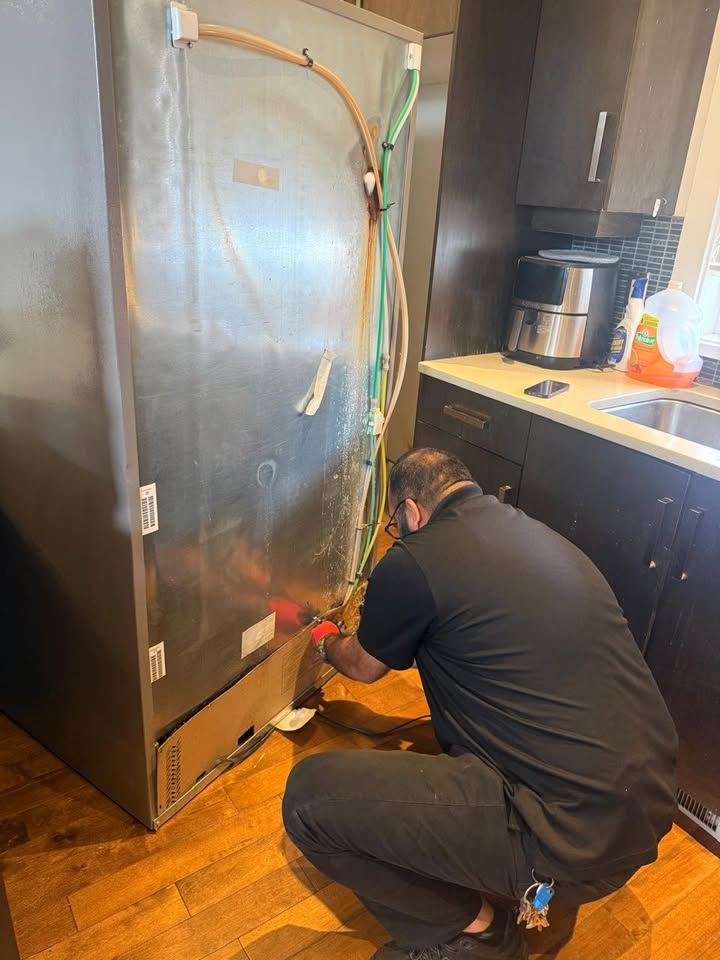
1. Burned-Out Defrost Heater Element
The defrost heater can be an encased metal Calrod loop or an exposed quartz glass tube with a Nichrome wire filament running through it. Thermal expansion and damp moisture eventually cause the filament to fracture.
Technicians test the heater by unplugging the refrigerator, removing the rear evaporator cover, disconnecting the heater harness, and checking continuity with an ohmmeter. A healthy residential defrost heater measures between 20 and 120 ohms. If the meter displays open loop (O.L.), the heater must be replaced.
2. The Bimetal Defrost Thermostat (Defrost Terminator)
Clipped directly onto the copper suction line of the evaporator coil is a small round metal sensor known as the bimetal thermostat. Its job is safety: it stays closed at freezing temperatures to allow the heater to run, but snaps open once the coil reaches 45°F to prevent the heater from melting the plastic cabinet walls.
Over years of cycling, moisture leaks past the resin seal, freezing inside and deforming the internal disc. Visual symptom: If the top metal cap of the bimetal is bulged or popped upward like a soda can left in the freezer, the thermostat is dead.
3. Torn Door Gasket Infiltrating Humid Air
How can you tell if frost is caused by an electrical defrost failure or a bad door seal? Inspect the frost texture:
- Dry, hard ice block behind the plastic wall: Defrost heater, bimetal thermostat, or control board failure.
- Soft, fluffy white snow coating shelves and packages: Warm, humid room air is leaking past a warped or torn magnetic door gasket.
Perform the "dollar bill test": close the door on a dollar bill along various points of the perimeter. If the bill pulls out freely with zero magnetic resistance, the gasket requires warming, realignment, or replacement.
Never Chip Ice with Screwdrivers or Knives
Homeowners often try to chip thick frost away with a butter knife or ice pick. The aluminum evaporator tubing wall is less than 1 millimeter thick. One slip punctures the coil, releasing refrigerant with a hiss and turning a $50 thermostat repair into an irreparable sealed-system disaster.
Professional Refrigerator Defrost Service in Victoria
West Coast Wrench diagnoses sealed evaporator loops, defrost control boards, and replacement OEM heaters across Greater Victoria, Saanich, Langford, and Sidney.