
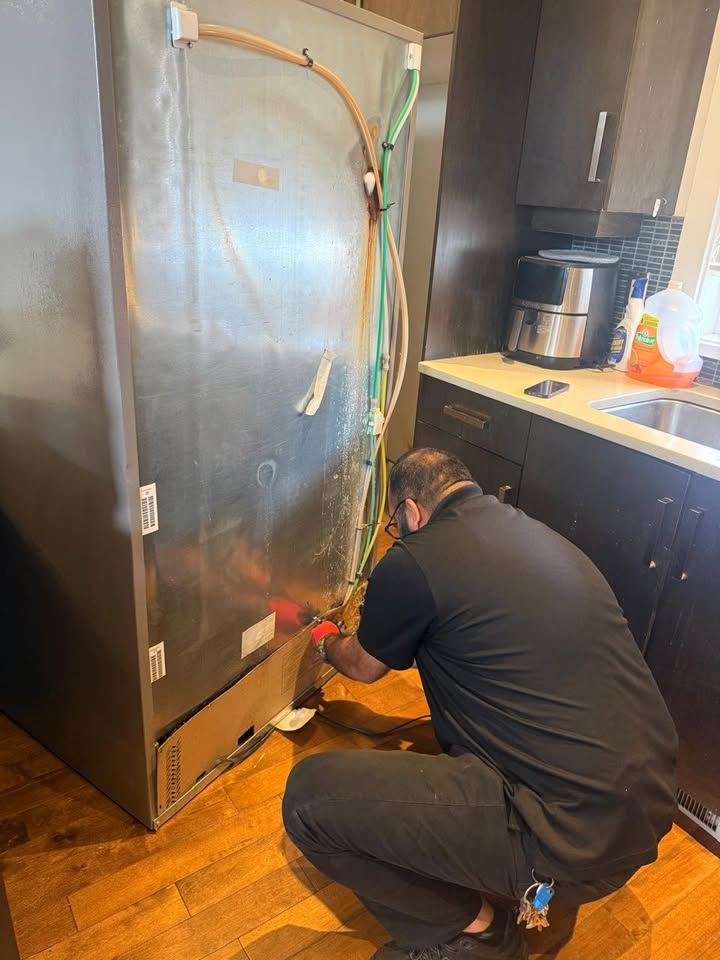
The Physics of Starting a Sealed Compressor
A refrigerator compressor uses a single-phase induction motor with two internal copper windings: the **Run winding** and the **Start winding**. Because a single-phase motor cannot self-start against high refrigerant pressure, it needs a momentary burst of extra electrical torque on the start winding.
That initial kick is delivered by a small plastic module mounted to the compressor’s side terminals called a **PTC (Positive Temperature Coefficient) start relay**. Once the motor spins up (within 0.5 seconds), the relay disconnects the start winding. If the relay fails, the compressor tries to start on the run winding alone, drawing massive locked-rotor current until the overload disc snaps open to prevent a house fire.
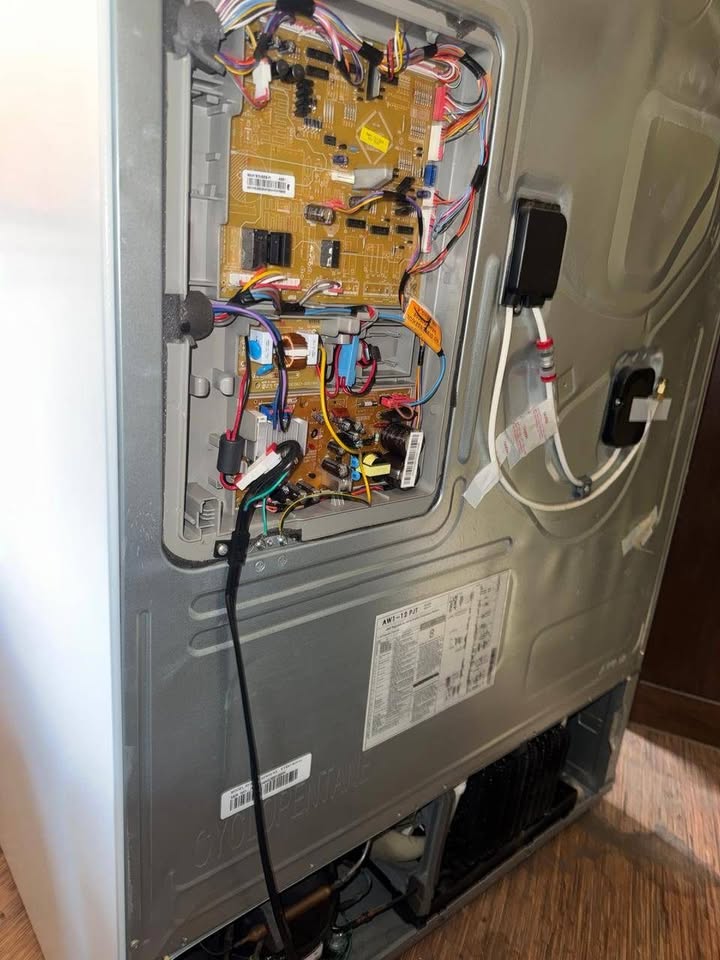
1. The \"Rattle Test\" for a Blown PTC Start Relay
On 80% of clicking refrigerators, the compressor itself is completely healthy—only the $40 start relay has burned out.
How to test it: Unplug the refrigerator, pull off the lower rear cardboard access panel, and locate the black dome compressor. Pop off the plastic electrical terminal cover and pull the relay block straight off the three metal pins. Shake the relay gently beside your ear: if it rattles like broken pottery, the ceramic wafer inside has fractured from thermal shock and cannot bridge the start circuit.
2. The Thermal Overload Protector (The Source of the Click)
The actual audible \"click\" sound is coming from a small circular bi-metal switch wired in series with the compressor’s common pin. When current spikes to 12–15 amps during a failed start, the bi-metal disc overheats within 3 seconds and snaps open with a loud mechanical tick.
After three minutes of cooling down, the disc snaps closed again (tick #2), the board sends 120V to try starting again, it stalls, and the overload snaps open again (tick #3). Left running in this loop for days, the heat can permanently break down the compressor's internal enamel winding insulation.
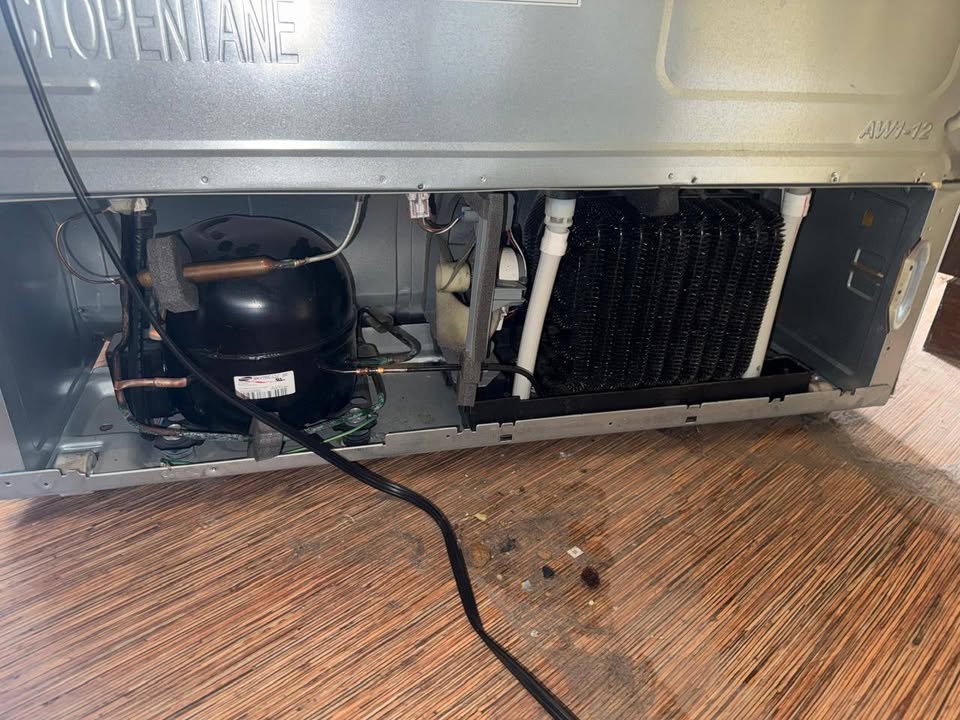
3. Testing Compressor Motor Windings (Common - Start - Run)
Before buying a new start relay, technicians check the compressor's three terminal pins with an ohmmeter to confirm the motor hasn't shorted to ground:
- Common to Start: Typically 3 to 10 ohms.
- Common to Run: Typically 1 to 5 ohms.
- Start to Run: Must equal the sum of both individual readings (e.g. 4Ω + 2Ω = 6Ω).
- Pin to bare copper chassis: Must read infinite resistance (open loop). Any continuity between a terminal pin and the metal compressor shell means the winding has shorted internally.
4. Weak Run Capacitor
Alongside the relay sits a 10–15 microfarad white or black run capacitor. Its job is to maintain motor efficiency while the compressor runs. If the capacitor bulges or leaks electrolyte, starting torque drops, causing erratic starting under hot summer conditions.
Fast Compressor Diagnostics Across Greater Victoria
Don't throw away a $2,000 refrigerator over a $40 relay! West Coast Wrench carries factory OEM start relays, overloads, and hard-start kits for Whirlpool, LG, Samsung, Frigidaire, GE, and Bosch across Greater Victoria and Southern Vancouver Island.