
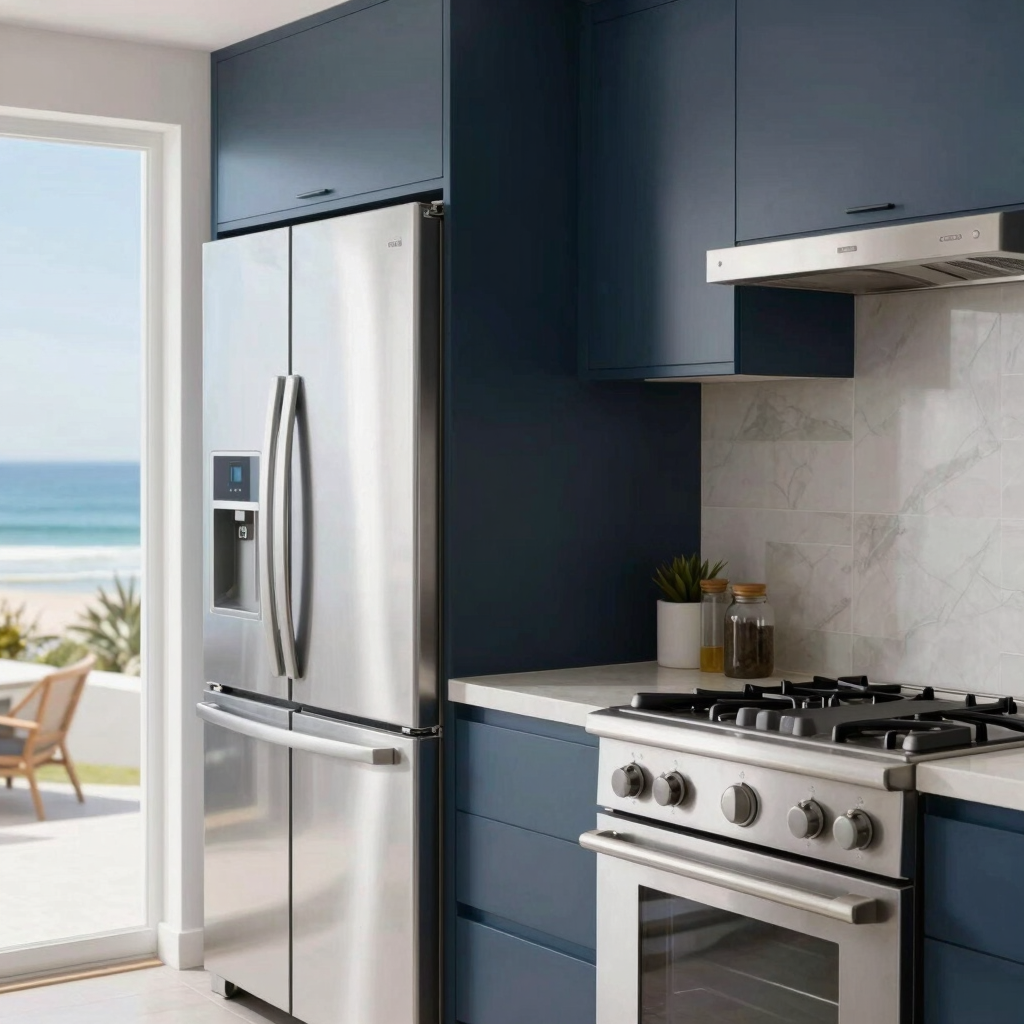
How Electric Ovens Divide 240-Volt Power
An electric range or built-in wall oven requires two separate 120-volt alternating current electrical lines—Line 1 (L1) and Line 2 (L2)—to produce 240 volts of heating potential. Both the upper Broil element and the lower Bake element share the exact same incoming power feed.
Because the Broil element works perfectly, you know with 100% certainty that your home's main double-pole 40A/50A breaker is healthy, the heavy terminal block is intact, and full 240V power is reaching the oven cabinet. The fault is strictly isolated to the dedicated Bake sub-circuit.
1. Burned Out Bake Element Winding
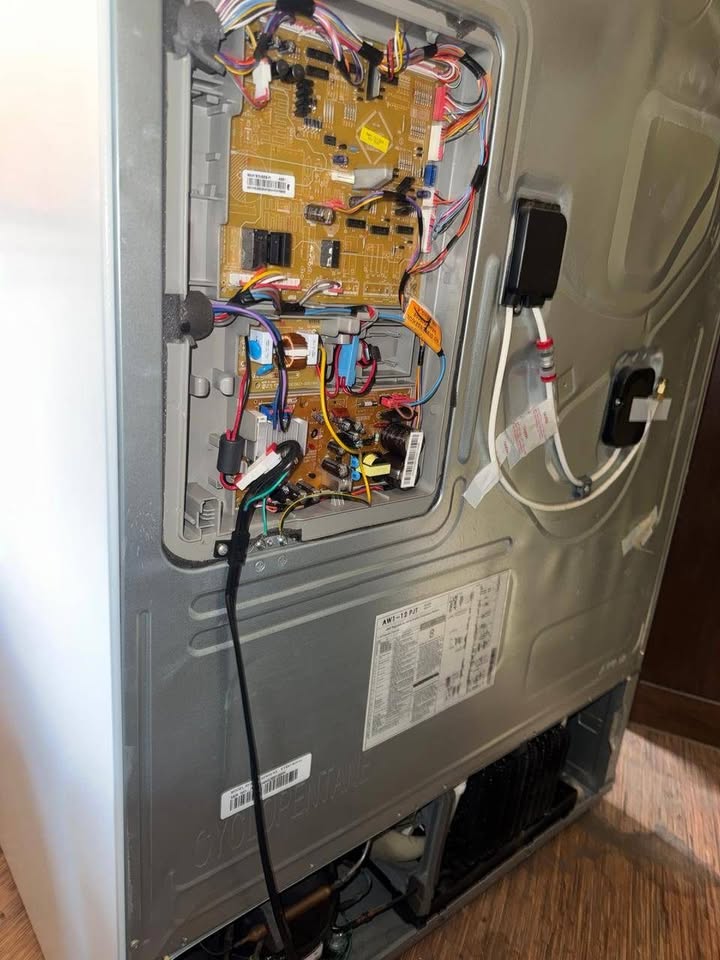
The most straightforward failure is an open resistance circuit inside the bake element itself. Even if the element is not visibly charred or swollen, internal Nichrome fatigue can sever the conductor wire cleanly inside the protective magnesium oxide packing.
Testing with a digital multimeter across the disconnected terminals takes 60 seconds: healthy resistance is 18 to 28 ohms; an open circuit displays OL, proving the element must be replaced.
2. Stuck Open Bake Relay on the Control Board
Modern ovens do not use heavy rotary selector switches. The digital keypad commands a central microcontroller, which switches tiny electro-mechanical relays soldered directly to the main printed circuit board.
There are separate relays for BAKE, BROIL, and often a common DLB (Double Line Break) safety relay. Over hundreds of baking cycles, the silver-cadmium contacts inside the Bake relay spark and arc under 20-amp inductive loads. Eventually, the contacts burn away, preventing 120V Line 1 from reaching the lower element even though the display shows "BAKE ON."
3. Melted High-Temperature Terminal Leads
Where the oven wiring harness clips onto the element spade tabs, high-temperature nickel-plated steel flag terminals are used. If a spade connection develops microscopic oxidation, electrical resistance escalates rapidly.
The connection can heat to over 600°F, vaporizing the terminal crimp and burning the wire in half behind the rear insulation blanket. Replacing the element without cutting back the oxidized wire and crimping a new high-temp nickel terminal will cause the new element to fail within weeks.
Professional Oven Diagnostics Across Victoria
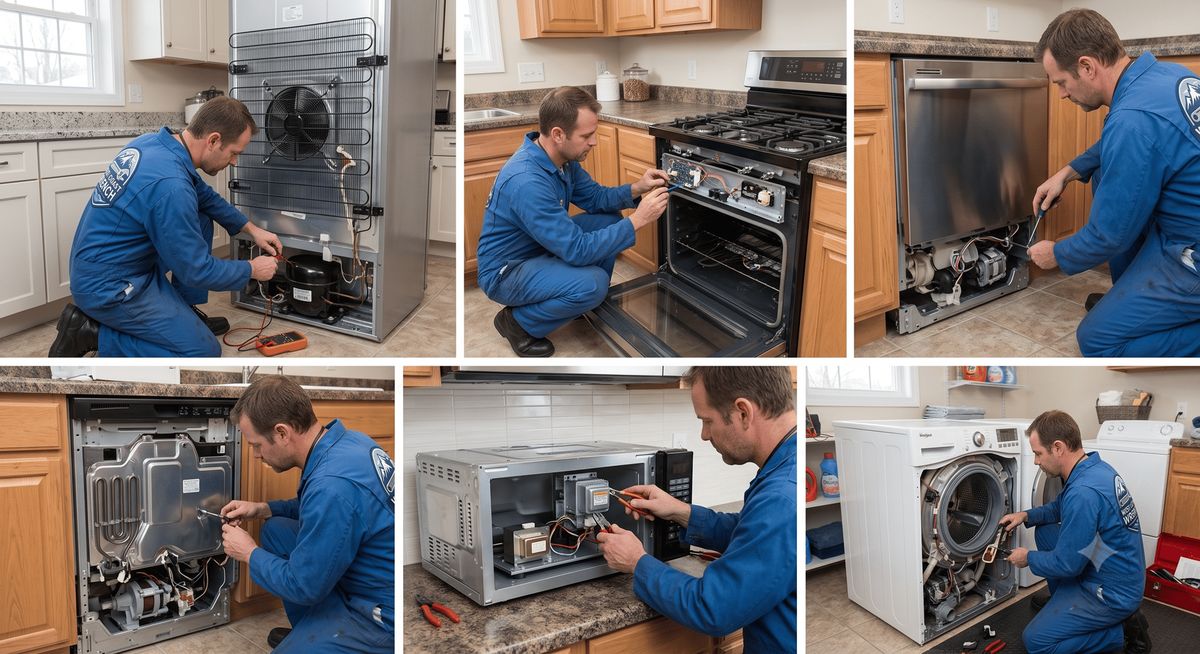
If your broiler works but you cannot bake, West Coast Wrench diagnoses control board relays, wiring harnesses, and replaces bake elements for Bosch, KitchenAid, Whirlpool, Frigidaire, GE, and Dacor electric ovens across Greater Victoria.