
The Physics of 20–40 kHz Electromagnetic Oscillation
Traditional electric burners heat through resistance (nichrome coils glowing red hot). An induction cooktop generates zero heat on its own. Copper induction coils beneath the glass receive high-frequency alternating current (20,000 to 40,000 Hertz) managed by Insulated Gate Bipolar Transistors (IGBTs).
This creates a fluctuating magnetic field that penetrates the ferromagnetic bottom of your cookware. Eddy currents surge through the iron molecules, producing instantaneous Joule heating directly inside the base of the pot. Because the magnetic field reverses polarity 40,000 times per second, acoustic vibrations are inevitable.
1. Acoustic Noise 1: Multi-Clad Cookware "Singing"
The most common customer complaint is a high-pitched buzzing or singing tone that increases with power level. In 90% of service calls, the cooktop is 100% healthy; the sound comes entirely from the pan.
Premium 3-ply and 5-ply cookware (like All-Clad) sandwiches conductive aluminum or copper between exterior sheets of magnetic stainless steel. Under high-frequency magnetic oscillation, these distinct metallic layers expand and contract at microscopically different rates. If the bonded layers have micro-voids or loose loose rivet handles, they vibrate against each other like a speaker cone.
The Cast Iron Diagnostic: Place an enameled heavy cast iron skillet with 2 cups of water on the same burner. Cast iron is a single solid, dense casting with no layered sheet metal. If the buzzing drops to near silence, your cookware composition is the acoustic source.
2. Acoustic Noise 2: Rapid Clicking or Ticking at Low Settings
When you set an induction element to low simmer (levels 1 through 3), you will often hear rhythmic mechanical clicking every 1 to 2 seconds.
To achieve ultra-low simmering without burning delicate butter or sauces, the inverter board cycles the induction coil on and off using pulse-width modulation (PWM). The clicking is the sound of the solid-state switching circuits opening and closing. This is normal engineered behavior on most induction platforms.
3. Acoustic Noise 3: Roaring Cooling Fan Blower
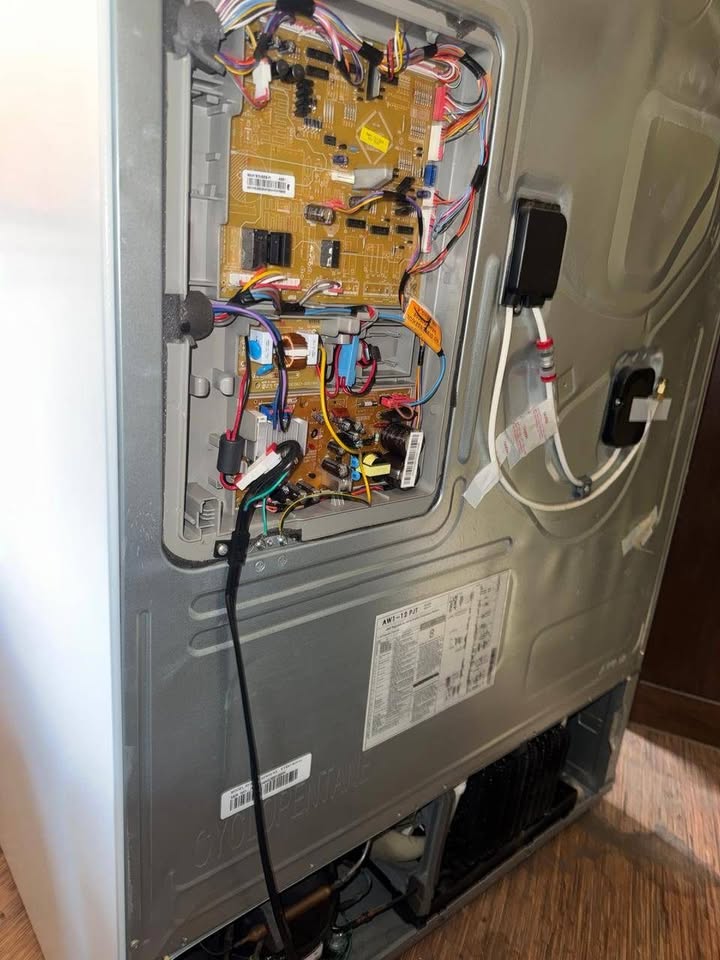
Induction electronics run extremely hot. The inverter power modules, bridge rectifiers, and filtering capacitors generate significant heat inside the sealed chassis. Modern units incorporate a high-CFM squirrel-cage cooling fan that pulls ambient air from inside the base cabinet.
If the fan roars at jet-engine volume even after you turn the burners off, check cabinet clearance. Induction cooktops require a minimum of 3 inches of open clearance beneath the chassis and unblocked air intake cutouts. If the cabinet drawer below is stuffed with baking sheets and cookbooks blocking the intake grills, the blower runs at emergency maximum RPM to prevent thermal shutdown.
4. When Buzzing Signals Component Failure
There are two specific acoustic signatures that demand immediate technician inspection:
Harsh 60Hz mechanical cabinet shudder: If the glass surface rattles against the countertop edge, the ferrite core bars mounted underneath the copper induction coil have cracked or the mounting spring clips have shaken loose.
Loud electrical snap followed by a tripped 50A breaker: An IGBT power transistor has suffered thermal avalanche breakdown and shorted directly to ground, requiring replacement of the generator power board.
Induction Diagnostics & Repair Across Greater Victoria
West Coast Wrench specializes in high-voltage solid-state induction repair, cooling fan replacement, and filter board diagnostics for Bosch, Thermador, Fisher & Paykel, Samsung, and Frigidaire Professional induction cooktops and slide-in ranges.