
Why Technicians Warn Against Using High-Heat Self-Clean
Pyrolytic self-cleaning is the most brutal test any kitchen appliance undergoes. To incinerate food residue into gray ash, the electric heating elements operate continuously until cavity temperatures reach 850°F to 900°F (450°C to 480°C).
At these furnace-grade temperatures, cooling fans must work at absolute capacity. If the oven is a built-in wall unit with snug cabinet cutouts, heat accumulates rapidly around the electronic control board and wire harness. More than 40% of oven repair calls we handle right before Thanksgiving or Christmas are caused directly by running a self-clean cycle.
1. The Hard Power Reset (Cycle Interruption Method)
Never yank or pry on the oven handle with a screwdriver. Oven handles are secured by screws threaded into tempered glass or thin sheet metal; prying will shatter the $300 door glass instantly.
Before disassembling anything, perform an electronic latch sync reset:
1. Go to your electrical breaker panel and flip the double-pole 40A or 50A range breaker OFF for 10 full minutes. This discharges capacitors on the main control board and resets microcontroller logic registers.
2. Flip the breaker back ON. Listen carefully to the top of the oven. On many models (Whirlpool, GE, Frigidaire), the computer executes a boot-up calibration sequence, energizing the latch motor for 8 to 15 seconds to find home position. You may hear the latch motor whir and the door pop open.
3. If the door remains locked, press and hold the CLEAR / CANCEL / OFF button firmly for 5 seconds. If that fails, press the SELF CLEAN button, wait 30 seconds, then press OFF.
2. The Blown High-Limit Thermal Cutoff Fuse
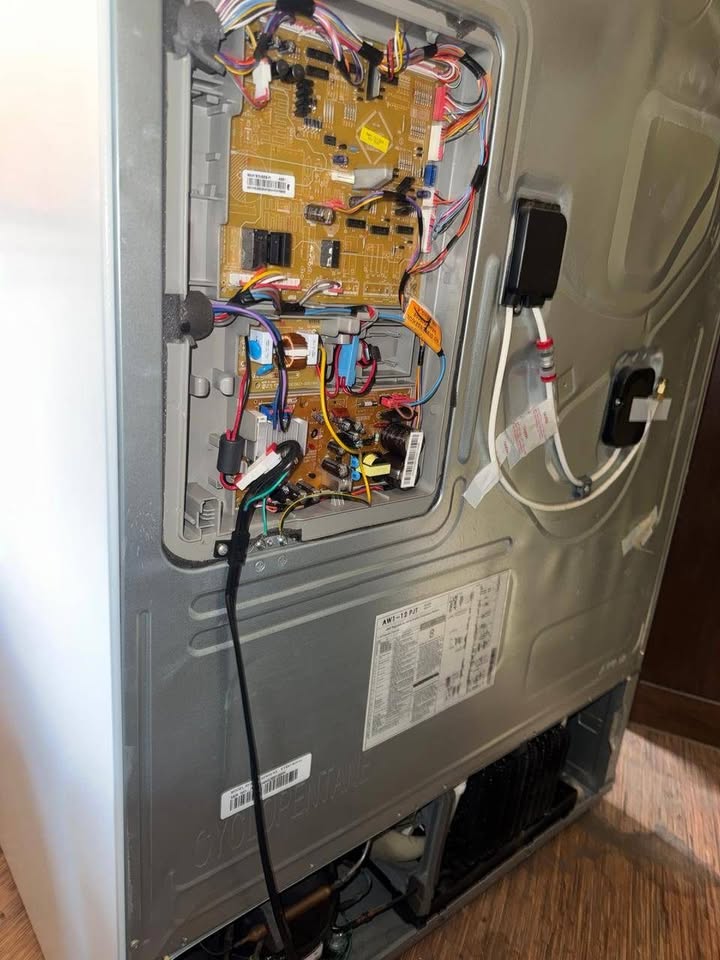
If the entire digital clock display is dead after running self-clean and the range refuses to turn on at all, the culprit is almost certainly the thermal safety fuse (thermal cut-out / TCO).
Electric ovens have a bimetal or pellet thermal fuse mounted on the back of the chassis wall or beneath the cooktop, wired in series with the main 120V line power to the control board. If heat exceeds 300°F in the component cavity, the fuse intentionally blows to prevent a cabinet fire.
When this fuse blows, all electrical power to the clock and latch motor is severed. Because the latch motor has no power, the hook remains locked over the door strike plate forever until the fuse is replaced.
3. Manual Mechanical Release Techniques
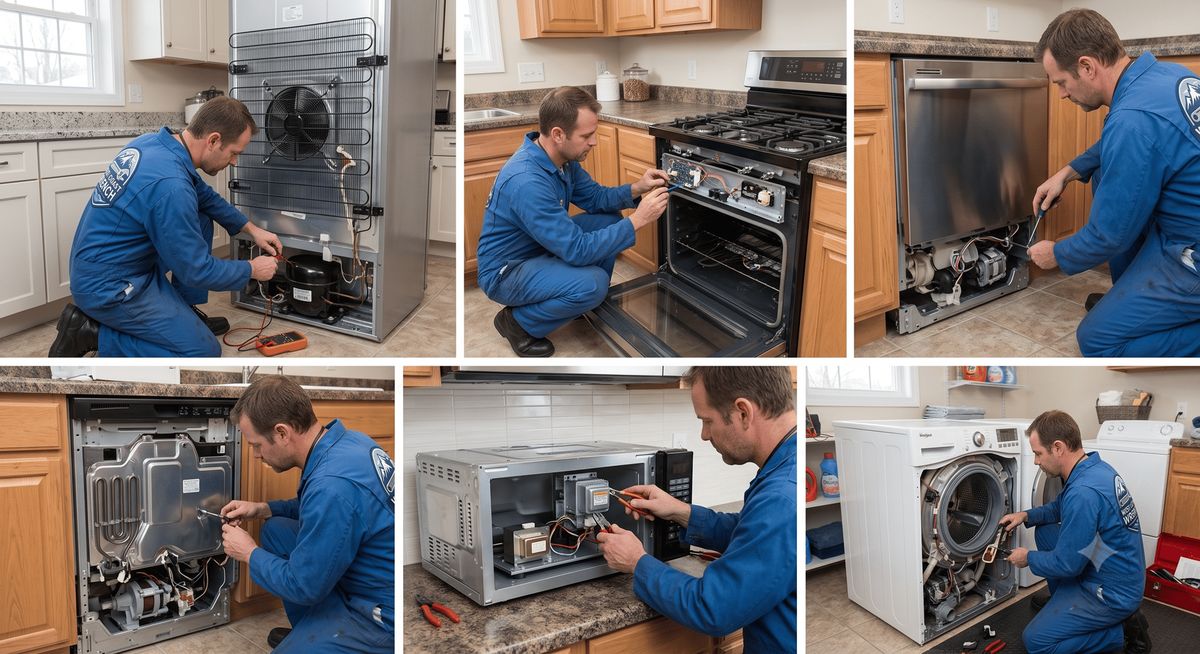
When the control board is dead, technicians use manual mechanical methods to release the door safely without damage:
Freestanding Ranges: The range is slid out from the cabinetry, the upper rear sheet metal shield is unscrewed, and the latch motor shaft is turned manually by hand, retracting the mechanical hook.
Built-in Wall Ovens: Because built-in ovens cannot be pulled forward while the door is bolted shut over the cabinet mounting screws, technicians use a specialized flexible fiberglass hook or slim rod inserted between the door top frame and the bottom of the control panel to gently push the locking cam arm sideways, disengaging the striker.
4. What to Do Going Forward: Steam Cleaning
Modern ovens now feature a 20-minute Steam Clean cycle that uses 1 cup of tap water at 250°F rather than 900°F pyrolytic heat. Steam clean loosens baked oils without overheating internal control boards, keeping thermal fuses and motorized latches completely safe.
Professional Electric Oven Diagnostics in Victoria
West Coast Wrench unlocks jammed oven doors, replaces blown thermal cutoff fuses, and repairs motorized latch assemblies for GE Profile, Whirlpool, KitchenAid, Bosch, and Samsung electric ranges and wall ovens across Greater Victoria.