
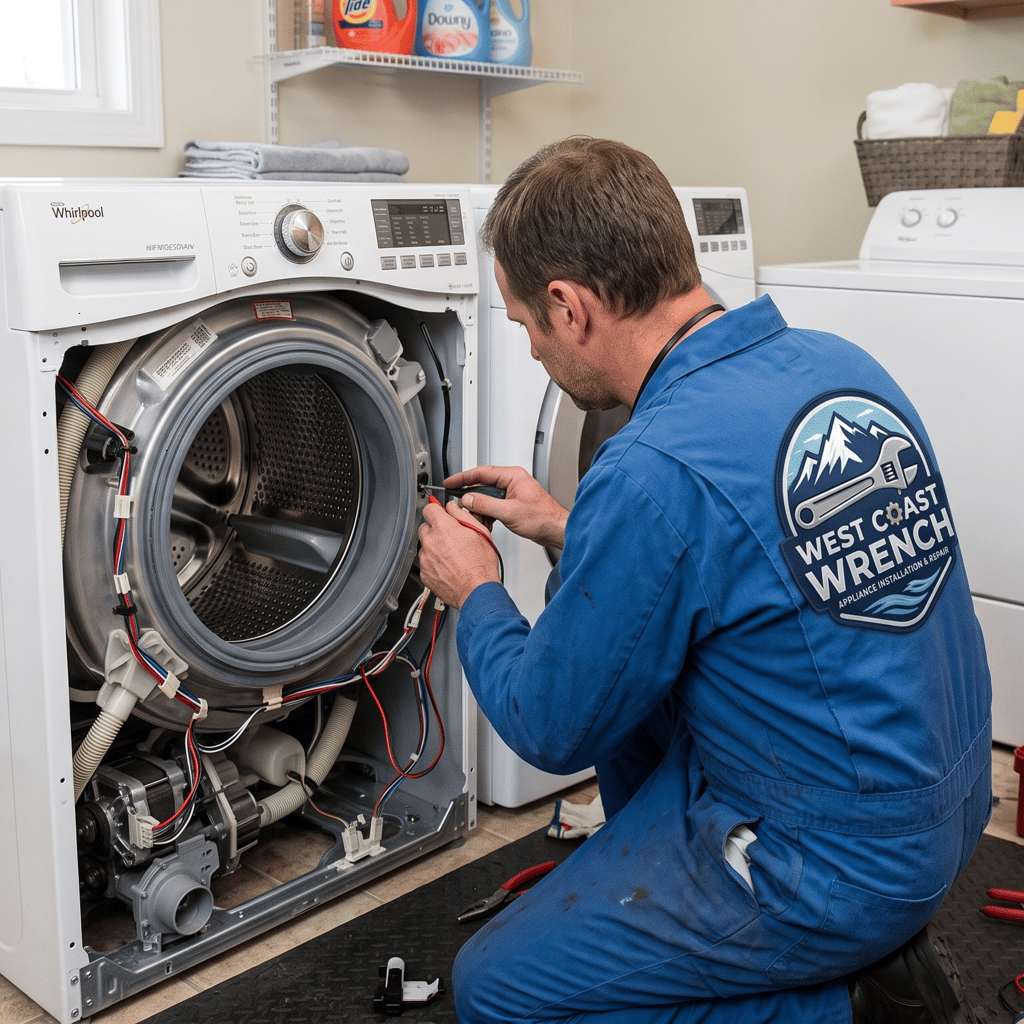
How a 240V Electric Dryer Uses Power
An electric dryer in British Columbia runs on a dedicated 240-volt, 30-amp circuit supplied by two 120V hot legs (L1 and L2) from your electrical distribution panel. The drum motor, interior light, and electronic timer board run on standard 120V power between one hot leg and neutral.
However, the heavy 5,000-watt heating element connects directly across both 240V legs, drawing roughly 21 to 23 amps under full load. If any high-voltage component shorts to the grounded metal chassis, the circuit breaker immediately detects an instantaneous overcurrent spike and trips to prevent an electrical fire.

1. The Leading Culprit: Sagging or Broken Heating Element Coils
Inside the dryer heater housing is a long coiled wire made of Nichrome alloy suspended on ceramic insulator standoffs. Over years of thermal expansion and contraction (heating to 1,000°F and cooling), the coil metal loses tension and physically sags.
Eventually, the sagging red-hot coil touches the grounded sheet-metal wall of the heater casing. The moment the motor centrifugal switch closes to power the element, a direct 240V dead short to ground occurs, snapping the 30A breaker instantaneously.
Multimeter Ground Fault Test:
- Unplug the dryer cord completely from the wall receptacle.
- Access the heating element terminals at the rear or behind the front kickplate.
- Set your digital multimeter to ohms (resistance).
- Place one probe on either element terminal and the other probe firmly against unpainted chassis ground metal.
- Reading: A healthy element must read OL (infinite open resistance) to ground. Any numerical resistance reading (e.g., 10 to 80 ohms) confirms a ground fault short requiring element replacement.
2. Melted Terminal Block Connections
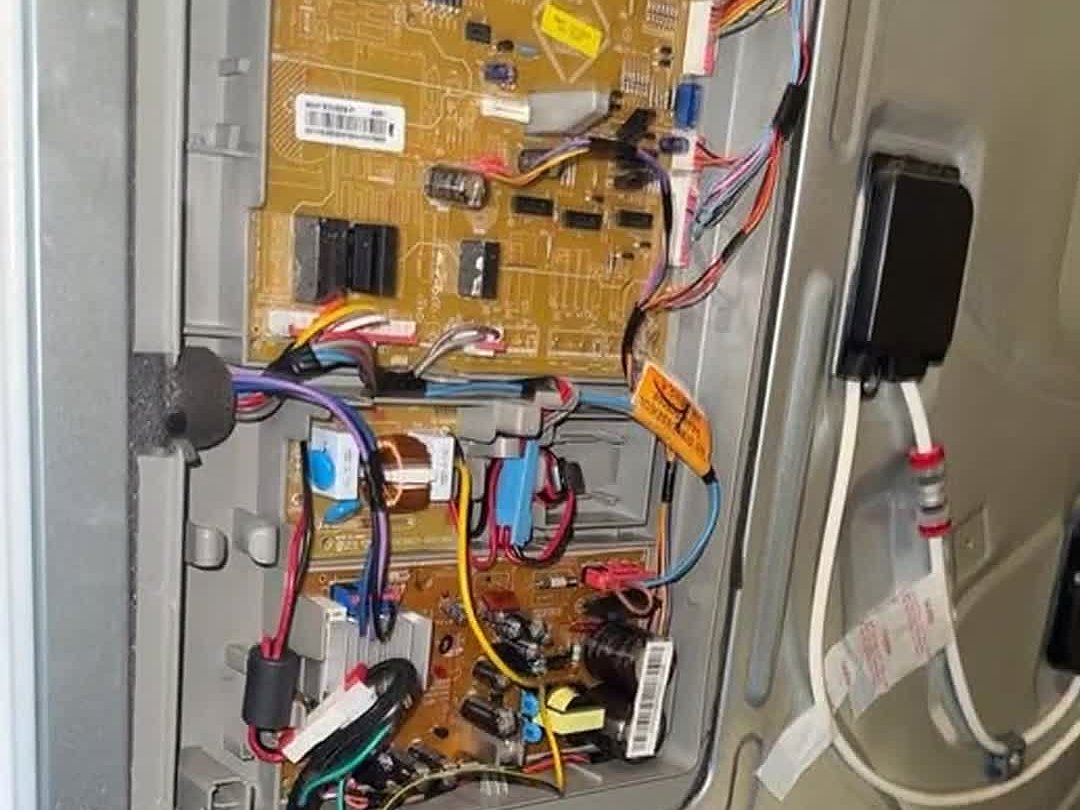
Where the heavy 3-prong or 4-prong appliance power cord joins the dryer chassis is a ceramic or plastic terminal block. If the brass retaining nuts were not torqued down during original installation, micro-vibrations loosen the connection.
High electrical resistance creates intense localized heat, eventually melting the plastic block and allowing the bare 120V copper wire eyelet to weld directly against the grounded metal chassis.
3. Motor Centrifugal Switch Failure
The dryer drive motor contains an internal mechanical centrifugal switch. Its safety role is critical: it prevents the heating element from energizing until the drum motor reaches full rotational speed (ensuring air is blowing over the element so it does not overheat).
If conductive lint packs into the motor stator housing, the centrifugal switch contacts can arc over or weld closed, creating an immediate overcurrent trip when the cycle initiates.
Expert Dryer Electrical Service Across Victoria
West Coast Wrench provides comprehensive electrical diagnostics, heating element replacements, and terminal block rebuilding for Samsung, Whirlpool, LG, Maytag, and Bosch electric dryers across Greater Victoria.