
The Chemistry: Aerobic Washing vs Anaerobic Putrefaction
During an active wash cycle, your dishwasher is an oxygen-rich, hot, caustic environment. Detergent enzymes and 130°F water break down grease. But once the cycle finishes and the stainless door closes tight, the tub becomes a sealed, dark, humid incubator.
If food slurry or sink wastewater is allowed to sit stagnant, oxygen levels drop to zero within 12 hours. Anaerobic bacteria (specifically sulfate-reducing bacteria) take over, metabolizing food proteins and exhaling hydrogen sulfide gas ($H_2S$)—the exact compound that creates rotten egg and sewer odors.
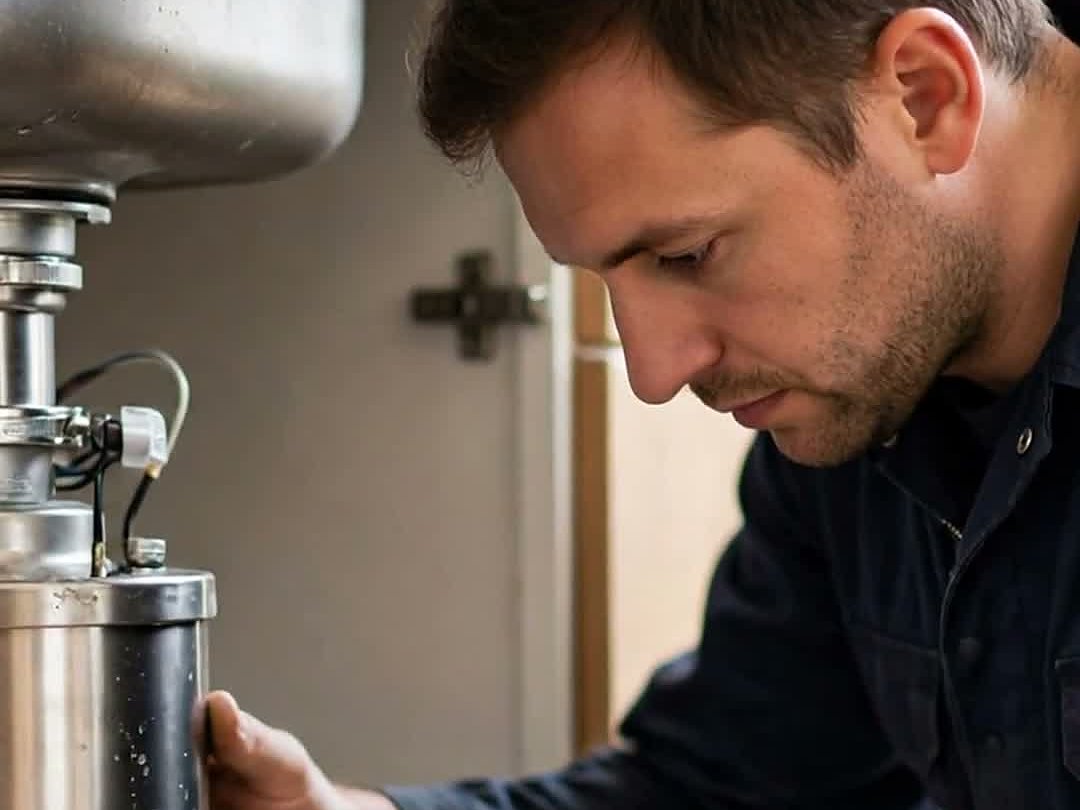
1. The Missing Under-Sink High Loop (Cross-Contamination)
Open the cabinet doors underneath your kitchen sink and trace the corrugated plastic drain hose coming from the dishwasher to the sink drain or garbage disposal tailpiece.
Under BC Plumbing Code and manufacturer specifications, that hose must rise **all the way to the underside of the countertop (minimum 32 inches above floor level)** and be securely strapped to the cabinet wall with a bracket before descending to the disposal inlet.
If the installer laid the hose flat across the cabinet floor, you have an open gravity siphon. Every time you wash pots or drain dirty spaghetti water in the sink, gray water backs down into the dishwasher drain hose, pooling under the filter. You are essentially washing dishes in old sink waste.
2. The Hidden Biofilm Shelf Behind the Bottom Door Gasket
Homeowners clean the stainless steel walls, but they rarely look at the lowest 2 inches of the inner door panel. Crouch down with a bright flashlight and look at the bottom threshold where the inner door hinges meet the tub.
Because the lower spray arm shoots outward, water never hits this bottom corner shelf with full velocity. Over two to three years, food grease, coffee grounds, and soap scum collect into a 1/4-inch thick layer of black, gelatinous anaerobic biofilm. Fix: Spray with warm water and white vinegar, and scrub the rubber lip with a stiff nylon brush until zero black residue remains.
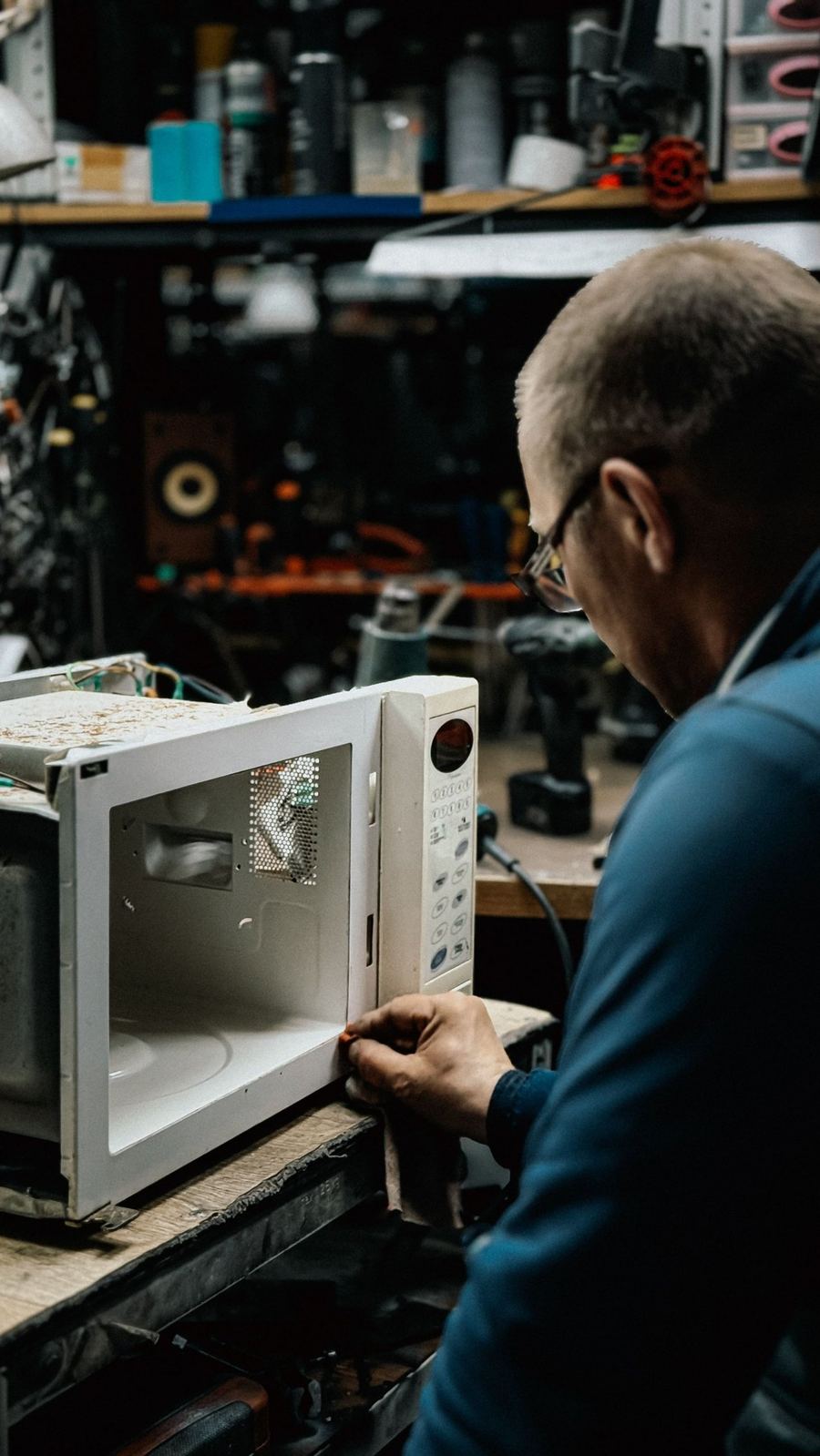
3. Decomposing Food Trapped in the Fine Filter Mesh
Modern quiet dishwashers do not have noisy disposal blades; they rely on a manual twist-lock micro-mesh cylindrical filter. If you haven't removed and washed this filter under hot running water with Dawn dish soap in the last 60 days, milk solids, onion skins, and animal fats are trapped in the mesh weave, rotting 2 inches from your plates.
4. The Technician Heavy-Duty Descaling Protocol
To eliminate entrenched bacteria and mineral sulfur odors across the entire pump manifold:
1. Empty the dishwasher completely. Remove and hand-scrub the filter cylinder and the bottom door wipe.
2. Place a glass measuring cup filled with 2 cups of plain white distilled vinegar (5% acetic acid) upright in the top dishrack.
3. Run a complete Heavy Duty / Pots & Pans cycle with the High Temp Wash or Sanitize option turned ON.
4. When finished, sprinkle 1 cup of sodium bicarbonate (baking soda) across the bottom tub floor and run a quick 30-minute hot rinse to neutralize acid and deodorize stainless steel surfaces.
Professional Dishwasher Servicing Across Victoria
West Coast Wrench installs code-compliant high-loop plumbing, replaces degraded drain hoses, and sanitizes sump manifolds for Bosch, Miele, Whirlpool, KitchenAid, and Samsung dishwashers throughout Greater Victoria.