
1. The Actual Model & Serial Tag (Not the User Manual)
Homeowners often hand technicians a glossy booklet that says "Whirlpool Dishwasher." But manufacturer manuals cover ten different sub-models across four production years. Parts diagrams vary dramatically by exact revision numbers (e.g., whether your model ends in `01` or `04` determines which drain pump impeller fits).
Locate the silver or white metal data plate on the appliance itself. On dishwashers, it is stamped along the left or right edge of the stainless door frame. On front-load washers, check the inner door recess or behind the lower pump filter door. On refrigerators, it sits inside the fresh food compartment on the left upper sidewall.
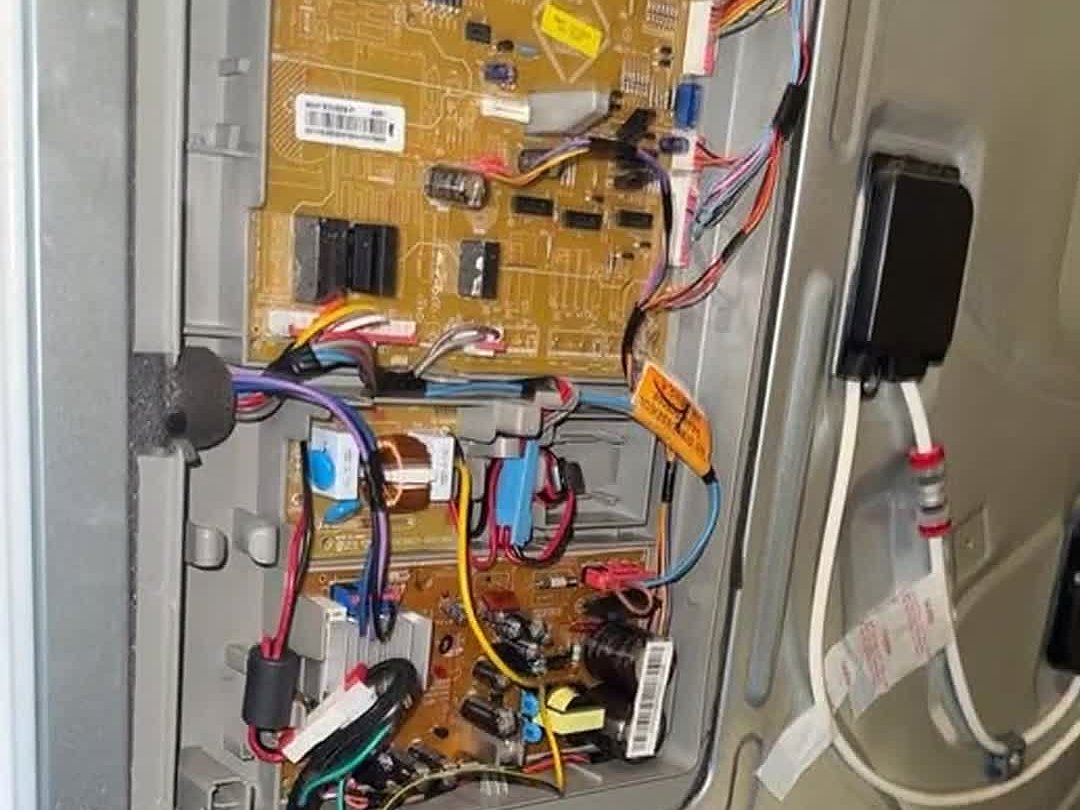
2. Record Intermittent Noises on Your Phone
Every technician knows the "mechanic's curse" — the washer squealed like a jet engine all morning, but runs silently the moment the technician arrives. Intermittent bearings, motor couplings, and relay clicking often depend on thermal expansion or specific cycle loads.
If your dryer squeaks, washer knocks on spin, or fridge clicks every twenty minutes, take a 10-second video on your phone with clear audio. Knowing whether a thump is 1-to-1 with drum rotation or 6-to-1 with motor RPM tells the technician immediately whether it is a support roller or a drive pulley.
3. Clear Workspace Access (The 3-Foot Clearance Rule)
Technicians carry heavy tool kits, multimeters, and drop cloths. If a refrigerator needs to be pulled forward to test condenser fan motors or inverter boards, please clear off wine glasses, cookbooks, and magnets sitting on top, as well as clutter on the floor in front.
For washing machines and dishwashers, clear out under-sink chemical bottles and empty the drum of soggy, half-washed laundry. Having direct, clean access saves valuable diagnostic time and protects your cabinetry and flooring from accidental scuffs.
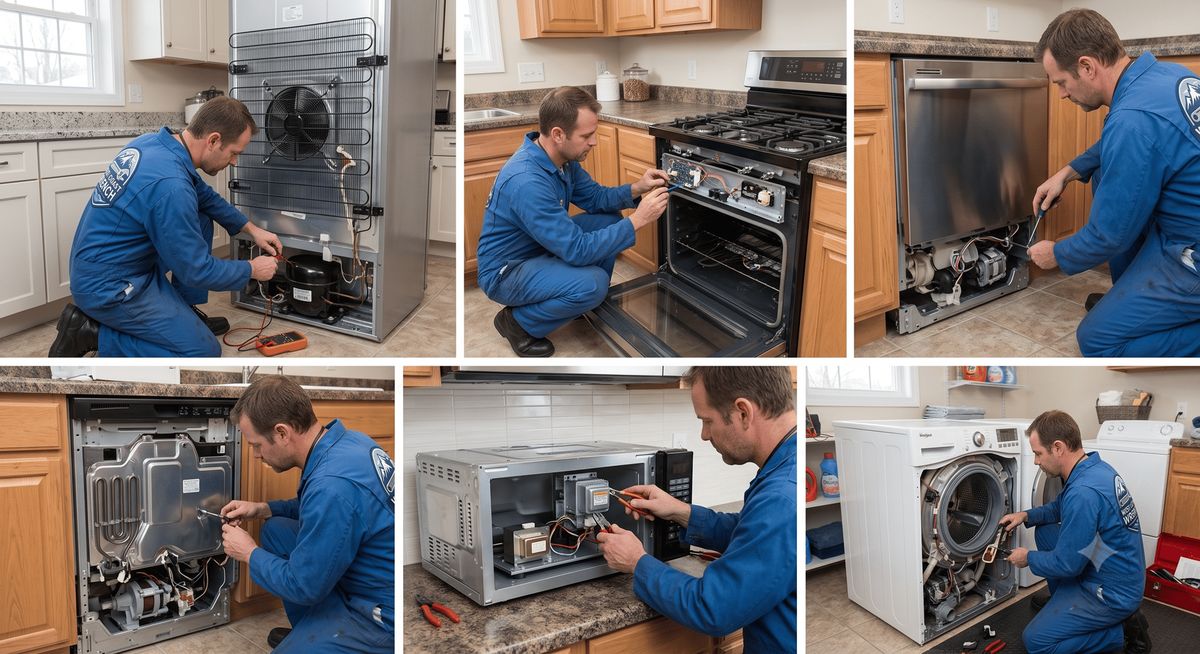
4. Don't Clear Error Codes Before We Arrive
Flipping the breaker off and on sometimes resets the display, but modern electronic controls store fault histories in non-volatile EEPROM memory. If your machine is showing an error code like `F21`, `E15`, or `LE`, write it down or take a photo before touching buttons.
Knowing which sub-system failed mid-cycle directs our multimeters straight to the failed sensor, thermistor, or triac without having to guess.
Ready to Book Your Diagnostic Visit?
West Coast Wrench provides licensed appliance diagnostics and repair throughout Greater Victoria, Saanich, Langford, Sidney, and Southern Vancouver Island. When you call, share your model number and we will arrive prepared with the right diagnostic data and factory components.