
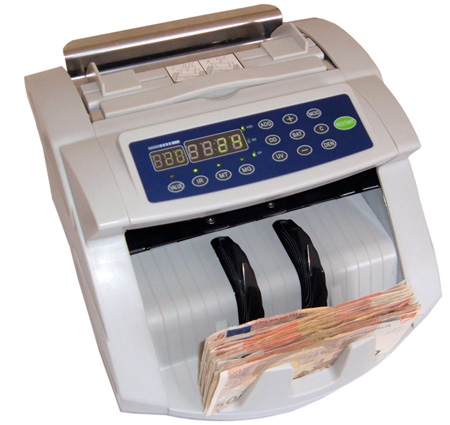
The Friction Separator Principle: Rubber Pad vs Drive Roller
A banknote counter separates a stack of bills into single notes using mechanical friction differential. The central drive roller rotates forward at high speed, pulling the bottom note forward.
Directly above the drive roller is a stationary rubber resistance block (the separator pad). The friction coefficient of the separator pad against the top of the note is engineered to be slightly lower than the roller grip, but significantly higher than the friction between two banknotes sliding against one another. If this mechanical balance drifts by even 10 microns, two notes slide into the feed track together.
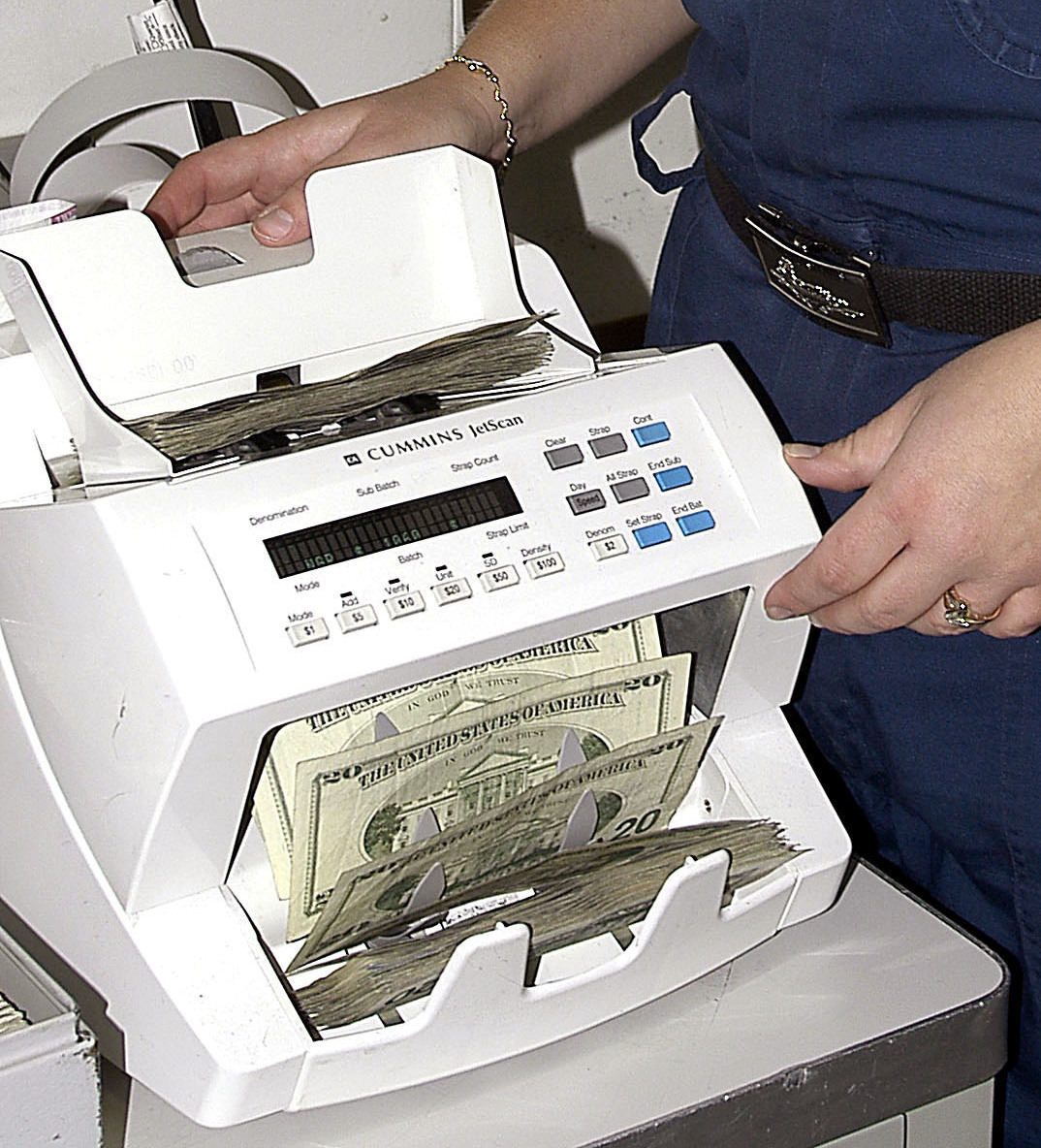
1. Calibrating the Hopper Resistance Tension Screw
On almost every commercial bill counter (Cassida, Glory, Kolibri, Carnation), there is an adjustment screw or knurled thumb wheel located on the top rear of the machine directly behind the bill tray.
To eliminate double-feeds:
1. Power the machine OFF.
2. Insert a single genuine banknote into the center of the feed rollers.
3. Pull the bill gently toward the front stacker. You should feel moderate, smooth resistance—similar to pulling a crisp sheet of paper from under a heavy coffee mug.
4. If the bill pulls out with zero resistance or feels loose, turn the adjustment screw clockwise by 1/4 turn (or one notch on dial models). This lowers the rubber resistance pad, narrowing the throat gap.
5. Test with a stack of 30 bills. If the machine now struggles to grab bills or groans, turn counter-clockwise 1/8 turn until feeding is smooth and continuous.
2. The Worn Valley on the Rubber Separator Pad
After processing approximately 200,000 to 400,000 banknotes, the stationary rubber separator pad wears a visible U-shaped channel directly where the center roller makes contact.
When this valley forms, the effective gap between the pad and roller expands. Thin or worn bank notes can easily double-stack inside that worn depression. Technicians flip open the hopper assembly, unscrew the retainer clip, and either flip the rubber pad over (many models feature dual reversible wear edges) or install a brand-new silicone separator strip.

3. Roller Glazing and Polymer Banknote Static
Canadian polymer banknotes (and newer international polymer issues) are non-porous plastic films. When banknotes rub against worn rubber rollers at 1,000 notes per minute, electrostatic charges accumulate rapidly.
Static electricity causes plastic bills to cling to one another like plastic wrap. Furthermore, ink residues from polymer notes leave an oily silicone sheen on the feed rollers. Technicians use rubber roller deglazer (Platenclene) to dissolve the glaze and recondition the rubber elasticity.
4. Adjusting Infrared Transmission Thickness Thresholds
If the mechanical feed is physically flawless but the machine still halts on single notes with 'DBL', the infrared optical density threshold in the engineering firmware menu is set too sensitive. Technicians access the service setup menu to recalibrate the baseline optical transmission voltage for current currency conditions.
B2B Currency Handling Engineering Across Greater Victoria
West Coast Wrench provides expert mechanical alignment, feed roller replacements, and sensor calibration for financial institutions, retailers, and vaults across Victoria, Saanich, and Southern Vancouver Island.